Do Kwon’s 12-Year Push: A Turning Point for Global Crypto Enforcement?

- Prosecutors seek 12 years as Terra’s $40B crash drives tougher global fraud scrutiny.
- Defense cites market stress and trader attacks to oppose the long sentencing push.
- Dec 11 ruling may shape cross-border crypto cases and set new enforcement norms.
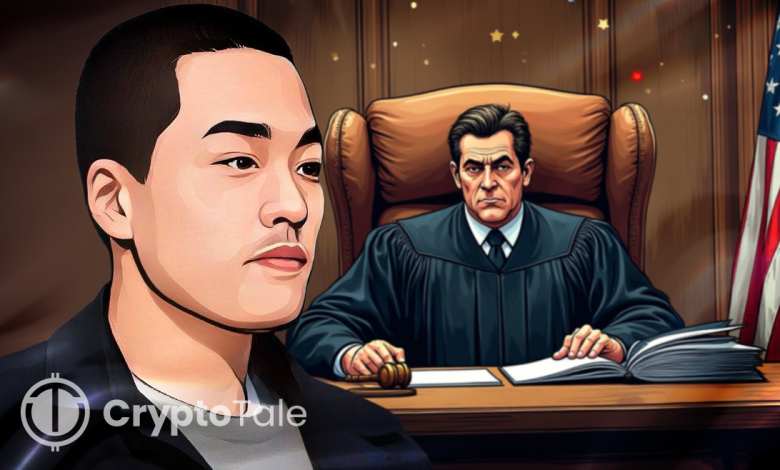
U.S. prosecutors have asked a federal judge to impose a 12-year prison term on Terraform Labs founder Do Kwon, marking one of the most consequential sentencing recommendations in the history of crypto-related fraud. The request, filed Thursday in the Southern District of New York, argues that the scale, reach, and impact of the Terra ecosystem collapse warrant a robust custodial response.
For a market still reckoning with multiple high-profile failures, the case is emerging as a test for how global authorities intend to police digital-asset misconduct going forward.
Prosecutors Frame Terra’s Fall as a “Colossal Fraud”
In their filing, prosecutors described Kwon’s actions as a “years-long fraud” that misled millions of global users and erased roughly US$40 billion in value at Terra’s peak. They said Kwon deprived purchasers of TerraUSD (UST) and LUNA of essential information needed to make informed investment decisions and instead “artificially inflated” the value of Terraform’s tokens.
According to the submission, the deception involved fundamental misrepresentations about the stability of UST, which Kwon promoted as a self-correcting “algorithmic stablecoin.” However, when the mechanism failed in May 2022, the collapse rippled through the broader crypto ecosystem, amplifying market stress already present.
Prosecutors argue that the 12-year sentence serves two purposes: to punish fraud on a scale rarely seen in digital finance and to discourage future misconduct across the crypto economy. Kwon has already agreed, under a plea agreement, to forfeit about US$19 million in illicit gains.
Defense Pushes Back, Citing Market Pressures and External Attacks
Kwon’s defense team has rejected the proposed sentence as disproportionate. In their submission, they argue that a prison term closer to five years would be more appropriate given the complexity of the events leading to Terra’s breakdown.
According to the filing, the crash was not solely the result of Kwon. His lawyers say that the algorithmic model faced targeted attacks from large traders, that external firms exploited structural weaknesses, and that the crypto market was already deteriorating due to macroeconomic pressures.
They submitted research papers and evidence of blockchain analysis to strengthen their claims. Kwon pleaded guilty to wire fraud and conspiracy to defraud earlier this year after being charged in March 2023 with multiple counts tied to market manipulation and deceptive investor communication.
Dec. 11 Sentencing: A Defining Moment for Crypto Accountability
The December 11 sentencing hearing will be a pivotal date for both victims and regulators, as they watch how the U.S. judiciary interprets responsibility in digital-asset failures. Many Terra investors suffered catastrophic losses. Victim statements submitted to the court describe families losing retirement savings, businesses collapsing, and long-term financial plans evaporating almost overnight.
Legal analysts say Judge Paul Engelmayer will weigh the scale of the losses, the fraud’s global reach, and the need for deterrence. The court’s decision is expected to influence not only U.S. enforcement strategy but also international agencies’ coordination on extradition, asset recovery, and investigative partnerships.
Related: Italy Orders Crypto Firms to Seek MiCAR Approval by 2025
A Global Precedent Taking Shape
If the recommended 12-year sentence is imposed, Kwon’s case may become a cornerstone in the evolving playbook for crypto-fraud prosecution. Authorities worldwide are increasingly aligning their approaches following significant actions involving FTX, Binance, Celsius, and other firms.
The Terra case stands out because of its cross-jurisdictional complexity and the scale of investor participation in emerging markets. Regulators in Asia, Europe, and Latin America have been monitoring the proceedings closely to gauge how the U.S. frames accountability for algorithmic stablecoin failures and misleading disclosures.
For crypto founders and project operators, the outcome may serve as a clear marker that the industry’s early “wild west” period is coming to a close. Enforcement models are shifting toward traditional financial-fraud standards, with greater emphasis on disclosure, risk management, and investor protection.
As prosecutors noted, the Terra collapse was not only a financial event but also a global shock that exposed vulnerabilities in unregulated digital economies. The court’s decision in December may therefore set the tone for how aggressively, and how uniformly, governments respond to future failures.