
Anti-EU Attacks Surge on X as Vitalik Buterin Calls Out Musk

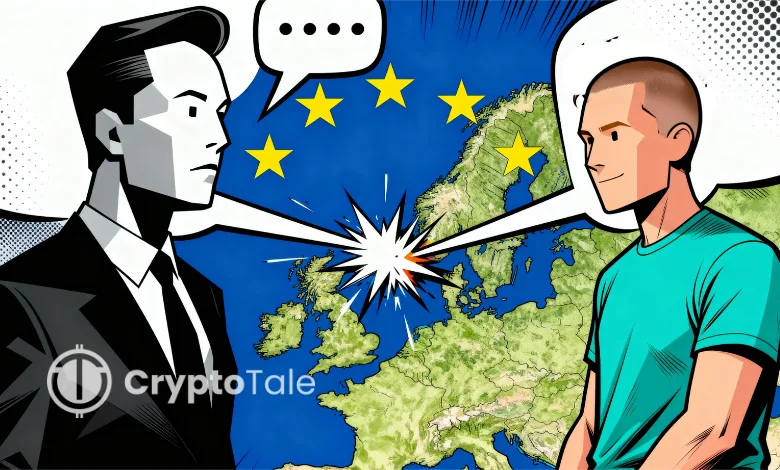
- Vitalik Buterin says the rising anti-EU wave on X feels driven by coordinated action.
- He warns that platform shifts can push hostile posts above steady, thoughtful speech.
- Musk rejects EU actions, while Buterin fears a surge that may reshape public debate.
The debate over political speech on X intensified after Vitalik Buterin publicly challenged a wave of fierce attacks on the European Union. He warned that the platform’s algorithmic shifts may be amplifying coordinated hostility while the service faces regulatory pressure from Brussels.
He said the tone of recent posts targeting Europe and the EU appeared unusually aggressive and suggested a broader pattern that departs from ordinary criticism. This confrontation arrived as X confronted a €120 million penalty under the EU’s Digital Services Act (DSA), setting the stage for an escalating clash between Musk and European authorities.
Growing Tensions Between Musk and the EU
Buterin noted that recent commentary about Europe had become “unhinged,” and he pointed directly to a series of posts he considered excessive. He referenced cases where users evoked imagery of “barbarians pillaging Rome,” arguing that the rhetoric did not match his experience from more than a decade of regular travel in Europe.
He acknowledged long-standing criticisms directed at EU policy. He cited GDPR clickthroughs, the proposed Chat Control legislation, and perceptions of bureaucracy that affect entrepreneurs. He added that discussions about sentencing rules and geopolitical responses often generated strong emotion.
Yet he said the tone of recent posts exceeded reasonable boundaries. He stated that it “felt more like a coordinated attempt to delegitimize than constructive criticism.” He further rejected claims that commentators targeted only the EU as an institution. He pointed to repeated attacks on London as evidence that the hostility extended to Europe as a whole.
The controversy intensified after X was fined €120 million. EU regulators said X failed to meet transparency duties related to its verification system, advertising disclosures, and researcher access to platform data. Those details were cited in official DSA guidance.
Elon Musk responded sharply. He reposted commentary claiming the EU, not Europe, was “the enemy of Europe.” He agreed with a user who said the bloc was “a bureaucracy set up by the socialists and communists.” Musk also wrote that the EU represented “the rule of the unelected bureaucrat.”
Buterin’s Concerns About Platform Algorithms
Buterin warned that the core issue extended beyond ordinary speech. He said the platform risked turning “into a death-star laser for coordinated hate sessions” if algorithms boosted sensational content at the expense of thoughtful dialogue. He described the risk of creating a system that spreads hostility faster than genuine debate.
He urged platform leaders to consider whether this shift could damage the long-term cause of free speech. He argued that free expression requires space for discomfort, yet he said it should not rely on manipulated virality.
In a direct message to Musk, he wrote, “I think you should consider that making X a global totem pole for free speech and then turning it into a death star laser for coordinated hate sessions is actually harmful for the cause of free speech.”
He added that he feared “huge backlashes against values I hold dear” if this trend continued. His remarks raised a question that now sits at the centre of the debate: What happens when a platform built on free speech becomes a vehicle for organized hostility?
Related: Vitalik Buterin Warns Cryptography Faces Quantum Threat by 2028
Crypto, Regulation, and a Search for Balance
Buterin’s comments carried weight in the crypto sector. Crypto communities often support decentralization, autonomy, and reduced central control. Those principles have shaped resistance to both corporate gatekeeping and regulatory overreach.
He referenced ongoing friction between decentralized systems and European privacy laws. The GDPR “right to be forgotten” requirement conflicts with blockchain immutability, creating disputes about compliance frameworks. Yet he did not call for deregulation. He instead pointed to a possible middle path.
His comments marked a significant moment where digital-rights debates, crypto governance, and geopolitical speech intersected with the evolving role of X under Musk.