SEC Backs On-Chain Markets With DTC Tokenization Pilot

- SEC leadership signals readiness for on-chain markets through regulated pilot programs.
- DTC pilot allows tokenized securities transfers while official records stay intact.
- Regulators support blockchain use without removing existing securities law duties.
U.S. financial markets are preparing for a move on-chain as regulators begin to support blockchain-based settlements and recordkeeping within existing securities rules. SEC Chair Paul Atkins said the shift reflects a deliberate effort to modernize market infrastructure while maintaining investor protection. In a post published on Dec. 12, 2025, Atkins said U.S. markets are “poised to move on-chain.” He added that the Securities and Exchange Commission is “prioritizing innovation and embracing new technologies to enable this on-chain future.”
The statement followed a public discussion with Maria Bartiromo and attracted more than 240,000 views. The response signaled strong interest in the SEC’s direction as digital assets and traditional finance converge.
The regulatory shift comes as clearing and settlement systems face pressure to improve speed and transparency. Blockchain technology has emerged as a potential tool to address these structural limits. Could on-chain settlement reshape how securities move across U.S. markets?
No-Action Letter Opens Door for Tokenized Securities
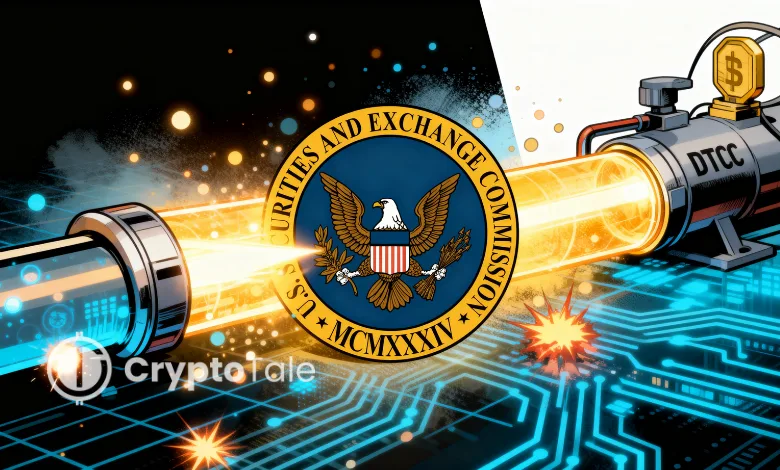
Atkins pointed to a recent regulatory step as proof of the SEC’s evolving approach. He said the Division of Trading and Markets issued a no-action letter to the Depository Trust Company for its voluntary securities tokenization pilot program. Atkins described the decision as “an important step towards on-chain capital markets.” The no-action letter signals the SEC will not recommend enforcement action for activities conducted within the pilot’s defined scope.
According to the SEC document, the pilot operates under the Preliminary Base Version of DTCC Tokenization Services. It allows DTC participants to elect tokenized recording of their security entitlements on distributed ledgers. The program remains voluntary and limited in scope. It aims to test how blockchain can operate inside an SEC-regulated framework without disrupting existing settlement processes.
Industry reporting confirms the relief grants and regulatory clarity. It marks progress toward treating tokenization as a functional element of mainstream securities infrastructure.
How the Pilot Works and What Changes for Participants
Atkins said on-chain markets could bring “greater predictability, transparency, and efficiency for investors.” He explained that participants in the DTC pilot may transfer tokenized securities directly between registered wallets. “All activity will be tracked on DTC’s official records,” Atkins said. The structure ensures regulators maintain visibility while allowing new settlement methods to operate.
The pilot does not replace existing systems. Instead, it runs alongside traditional processes to gather operational data and identify potential efficiencies. Atkins said he is “excited to see the benefits of this program” as markets move toward on-chain settlement. He added that innovation depends on allowing new technologies to develop within reasonable regulatory boundaries.
“But this is just the beginning,” Atkins said, noting that progress requires regulators to harness new business models “without being burdened by cumbersome regulatory requirements.”
Related: Atkins Says Many Crypto ICOs Fall Outside SEC Jurisdiction
Regulatory Guardrails Remain in Place
The SEC has made clear that tokenization does not change core legal obligations. Any tokenized security must still comply with U.S. securities laws, including registration and disclosure requirements. Official SEC materials confirm that the pilot does not exempt participants from existing compliance duties. The program operates within current regulatory frameworks.
Atkins and other officials have said blockchain-enabled settlement could narrow the gap between trade execution and final settlement. Faster settlement could reduce counterparty risk and operational costs. Media coverage and public remarks indicate Atkins views tokenization as a strategic direction rather than a temporary experiment. The pilot may inform future regulatory guidance as on-chain markets evolve.