The Pattern Never Dies: Crashes That Forced a New Financial Reality

The 1980 crash became history. Even after all these years, the market crash hasn’t disappeared from investors’ minds. Silver Thursday was frequently mentioned by traders who experienced it whenever markets acted weirdly. The crash was not only a historical event to them but also a blueprint for how quickly things can go wrong when leverage, liquidity, and blind confidence come together. Younger investors promptly dismissed it as an out-of-date warning, but market veterans knew the truth. Patterns do not disappear, but they recreate themselves.
The Illusion of Progress in the Markets
The tension was not new to any rally in the next 20 years. Prices soared, and the enthusiasm was so intense that, at the back of their minds, people who recalled the Hunts could ask themselves whether it was another squeeze, another imbalance, and another bubble being created. Markets continued to change, but man did not. Optimism returned. Greed resurfaced. And new bubbles started to pop, all of which were based on the premise that history would not repeat itself.
The internet boom followed in the 1990s, and the new craze was tech stocks. The businesses that had no revenue shot to unrealistic valuations primarily on hype. Investors have deceived themselves into thinking that making money is not essential and that old rules do not apply. It was a typical instance of history repeating itself, a new market, a new story, but the same mindset. By 2000, the dot-com bubble had burst, wiping out trillions of dollars in wealth and throwing millions of investors into shock. But that was not enough to change market psychology forever.
After tech, there comes real estate. This illusion was deeper than the other market breakdowns in history. Banks developed complex derivatives, and mortgages were issued with virtually no examination of income, employment documents, or bank statements. Wall Street made these risky assets seem like safer investments. It felt unstoppable. Home prices began rising annually, investors purchased homes with borrowed funds, and the financial system was quietly hooked into a framework based on unsound assumptions. Once again, it was the voices that had recalled Silver Thursday that had noticed the warning signals, such as runaway leverage, unrealistic optimism, and a feeling that the markets simply could not crash down simultaneously.
Then there was 2008.
The Collapse That Changed Everything
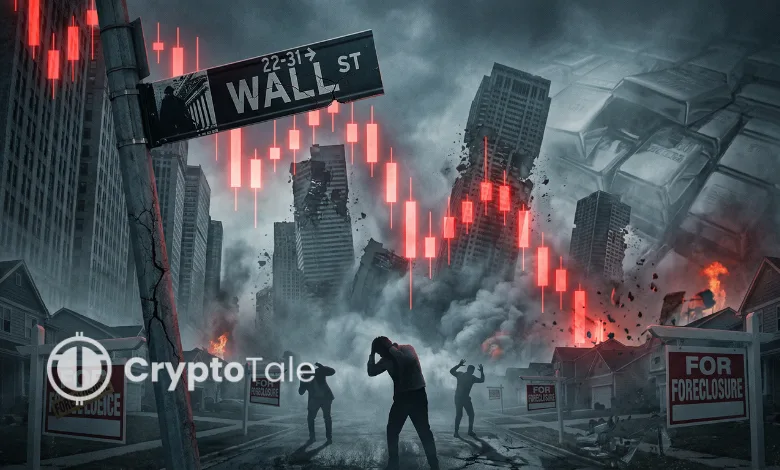
2008 was the worst financial meltdown of any since the Great Depression. Banks experienced significant failures, leading to the collapse of major mortgage giants. As a result, financial markets saw dramatic declines, falling at rates that caught everyone off guard. The rapid downturn left investors and analysts reevaluating their strategies and raised concerns about the broader economic stability.
The U.S. government intervened during a critical economic crisis, taking remarkable steps to stabilize the financial system. This intervention included a range of emergency measures designed to prevent further collapse of large financial institutions that had played a pivotal role in the economy. The contrast between massive bailouts for these institutions and the devastating losses ordinary citizens faced was striking.
Families were losing their homes due to foreclosures, many were laid off from their jobs, and individuals were watching their savings evaporate. This period was characterized not only by financial confusion but also by profound emotional distress among U.S. citizens. People felt betrayed by a system they trusted, and their faith in financial institutions, regulators, and economic stability eroded severely.
As confidence was shaken, the societal structure began to unravel, leading to increased anxiety and distrust in the mechanisms meant to support economic well-being. The crisis underscored the glaring disparities between Wall Street and Main Street, highlighting a growing divide that spurred debates about reforming financial regulations and ensuring accountability in the future.
This crisis is a symptom of a broader problem: recklessness and irresponsibility from Wall Street to Washington – Barack Obama.
To a great extent, the lesson was painful: the system was not as stable or fair as people thought. And in this moment, there was a revival of discussions from the 1980s. Silver Thursday had demonstrated how a small group of influential participants could corrupt the whole market. The 2008 crisis proved that not even the world economy could withstand total collapse if power were concentrated in a small, interconnected group. The events which provoked the same questions were the same: Why must so little have so much to say? What would prevent people from being guarded by a system that has been created based on trust and disappear overnight?
A new form of distrust emerged as governments printed money to prevent a further plunge into recession. People began seeking options – something that would not be easily manipulated, corrupted, or interfered with. It was not based on central powers or financial institutions. Something that could not be hoarded, locked up, or frozen like silver was in the Hunts’ story.
Then, in 2009, the world was answered, unspoken.
Stay tuned for PART 3 to know what it is.