JPMorgan Launches Onchain Money Market Fund With Real Yield

- JPMorgan seeded its on-chain money market fund with $100M before opening to investors.
- The fund allows daily yield accrual while assets stay on-chain through tokenized ownership.
- Institutional demand for blockchain-based liquidity products continues to accelerate.
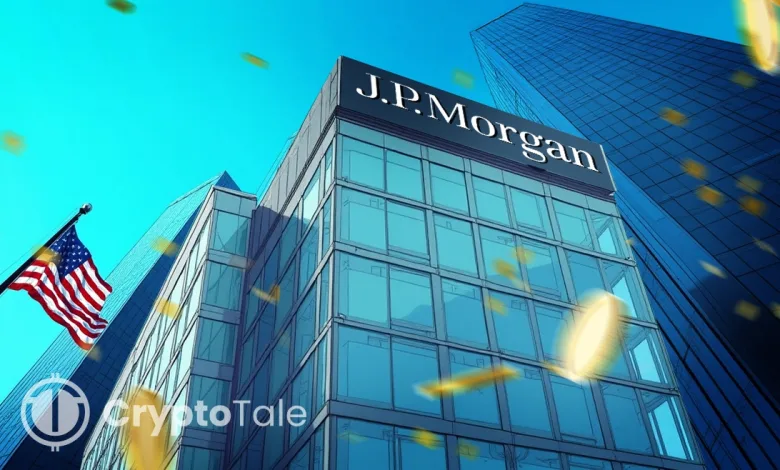
JPMorgan Chase has launched a tokenized money market fund on blockchain, expanding its digital asset strategy while committing $100 million of its own capital before opening the product to outside investors. The fund, called My OnChain Net Yield Fund or MONY, operates on JPMorgan’s Kinexys Digital Assets platform and targets qualified investors.
The private fund allows subscriptions and redemptions using cash or Circle’s USDC stablecoin and provides daily accrued interest through blockchain-based tokenized ownership.
JPMorgan Introduces MONY Through Its Asset Management Arm
The MONY fund comes from JPMorgan Asset Management, which oversees about $4 trillion in client assets, and it represents a live blockchain product rather than a pilot initiative. JPMorgan seeded the fund with $100 million in capital before opening access to qualified investors on Tuesday.
Eligible investors include individuals with at least $5 million in investments and institutions holding a minimum of $25 million, while the minimum investment stands at $1 million. Investors can subscribe through JPMorgan’s Morgan Money portal and receive digital tokens that represent ownership, which they can hold in a crypto wallet.
Like traditional money market funds, MONY holds baskets of short-term debt securities and aims to deliver yields higher than typical bank deposits. Interest payments and dividends accrue daily, while investors can move funds on-chain without leaving the blockchain environment.
Tokenization Strategy Reflects Growing Institutional Demand
JPMorgan executives said client demand for tokenized products continues to grow as institutions seek blockchain-based versions of familiar investment vehicles. “There is a massive amount of interest from clients around tokenization,” said John Donohue, head of global liquidity at J.P. Morgan Asset Management.
Donohue added that the bank expects to lead in this space by offering blockchain products that mirror traditional money market fund choices. In July, JPMorgan analysts said tokenizing money market fund shares could help those funds remain competitive with stablecoins.
They also noted that tokenization could unlock new uses while preserving regulatory alignment for institutional investors. Those comments followed an announcement from BNY and Goldman Sachs, which said they would use blockchain technology to track ownership of select money market funds. The firms described their project as a step toward improving the utility and transferability of existing money market fund shares.
Related: JPMorgan Builds New Bitcoin Note Linked to Rising IBIT Values
Broader Industry Shift Toward On-Chain Finance
JPMorgan’s launch arrives as blockchain technology shifts from a crypto-focused tool toward a component of banking infrastructure. The bank recently tokenized a private equity fund for wealthy private banking clients and introduced JPM Coin as a deposit token for institutional customers.
These efforts form part of a broader digital asset strategy covering payments, settlements, and on-chain collateral management. The total market value of tokenized real-world assets reached a record $38 billion in 2025, based on data from The Block. Tokenized money market funds have gained traction among crypto-native investors who seek yield without moving assets off-chain.
Currently, BlackRock manages the largest tokenized money market fund, holding over $1.8 billion in total assets. Goldman Sachs and BNY Mellon also announced their intention to create digital tokens linked to the money market funds of the top asset management companies. This year, various cryptocurrency exchanges have developed tokenized stocks and securities in certain markets, thus providing investment options through the blockchain.