BlackRock Targets Bitcoin Income Play With Covered-Call ETF Filing


- BlackRock filed an S-1 for a Bitcoin ETF that sells covered calls to generate steady income.
- The fund uses IBIT-linked options to earn premiums instead of betting on price direction.
- Analysts say added call selling could compress volatility without moving Bitcoin prices.
BlackRock has quietly widened the aperture on how institutional investors can access Bitcoin, filing an S-1 for a new product that blends spot exposure with income generation. The proposed iShares Bitcoin Premium Income ETF is designed to track Bitcoin’s price while systematically selling call options, turning part of the asset’s volatility into distributable cash flow.
The filing frames the ETF less as a directional bet and more as a yield-focused wrapper around existing spot exposure. Instead of relying solely on price appreciation, the fund plans to collect option premiums by systematically writing covered calls, primarily linked to BlackRock’s own spot Bitcoin ETF. For markets already adjusting to ETF-driven flows, the proposal highlights how volatility itself is becoming an investable output.
From Spot Exposure to Premium Capture
According to the prospectus, the Premium Income ETF will sell call options tied mainly to shares of the iShares Bitcoin Trust (IBIT), with the option to reference other Bitcoin exchange-traded product indices at times.
The strategy allows the fund to earn income from option buyers seeking upside exposure while distributing the collected premiums to shareholders. Bloomberg ETF analyst Eric Balchunas highlighted the filing on X, noting that key details such as the ticker symbol and management fee have not yet been disclosed.
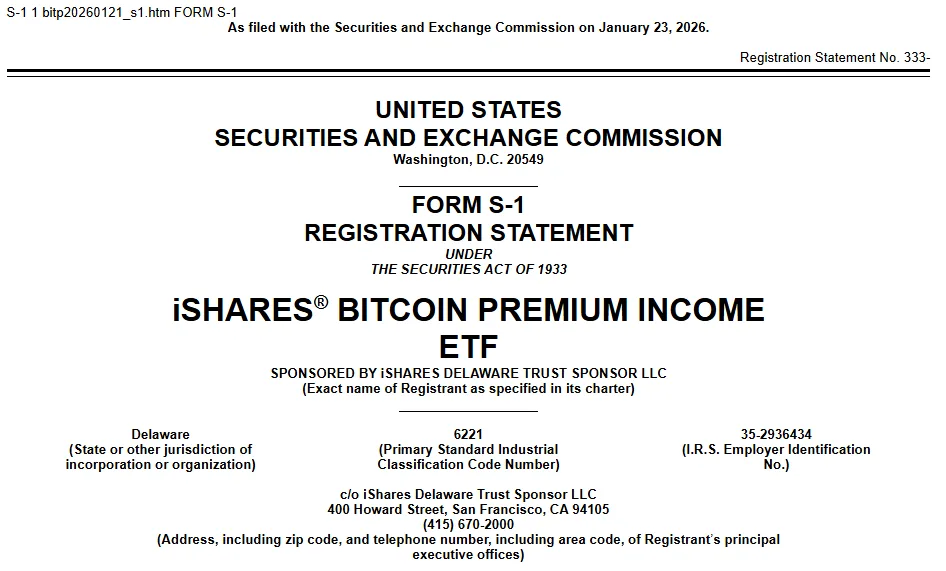
Source: X
He emphasized that the stated goal is to “track performance of the price of Bitcoin while providing premium income” through an actively managed call-writing approach. IBIT itself remains a straightforward spot vehicle, holding only Bitcoin without derivative overlays.
Since its launch, it has grown into the largest U.S. spot Bitcoin ETF by assets, reflecting strong institutional demand for direct exposure. However, the new filing contrasts with that model by layering an income strategy on top of price tracking.
Institutionalizing Volatility as Yield
What stands out is that the covered-call structure effectively converts frequent Bitcoin price swings into a source of cash flow. By selling calls, the fund receives premiums upfront, which can smooth returns during sideways or moderately rising markets.
In exchange, the upside above the option strike is partially forfeited if prices rally sharply. This approach is familiar in equity markets, where covered-call ETFs have long appealed to income-focused investors.
Yet, applying it to Bitcoin signals how far the asset has moved into conventional portfolio construction. Rather than speculating on long-term appreciation alone, the ETF is built to extract value from how Bitcoin moves over time.
Market Impact and Volatility Supply
On the other hand, some derivatives participants view the filing as another contributor to an already crowded volatility-selling environment. Wintermute head of OTC trading Jake Ostrovskis said that implied volatility in Bitcoin options has faced sustained pressure following the launch of spot ETFs and related options markets. Additional systematic call selling, he noted, could weigh further on implied premiums.
The concern is not directional price pressure, but yield compression. As more strategies sell calls to generate income, option premiums may decline, reducing headline yields over time. In such conditions, returns become more dependent on strike selection, timing, and execution rather than broad volatility levels.
Related: Vitalik Explains Why Blockchain Scaling Favors Computation
A Maturing ETF-Native Market
If approved, the Premium Income ETF would add another layer to Bitcoin’s ETF ecosystem, shifting part of volatility pricing toward exchange-listed option flows linked to ETF shares. Traders will likely monitor whether call supply clusters around specific expiries or strikes are tied to IBIT activity.
At press time, Bitcoin traded at $88,383. The filing underscores a broader trend: as Bitcoin becomes more embedded in regulated ETF structures, strategies that repackage risk into income are moving from the margins to the mainstream.