
Canada Unveils Stablecoin Rules for Safer Digital Use Now


- Canada plans new stablecoin rules that require registration and stricter oversight.
- Issuers must keep full reserves, redeem at par, and publish transparent policies.
- The framework targets safer payments, stronger trust, and cross-border alignment.
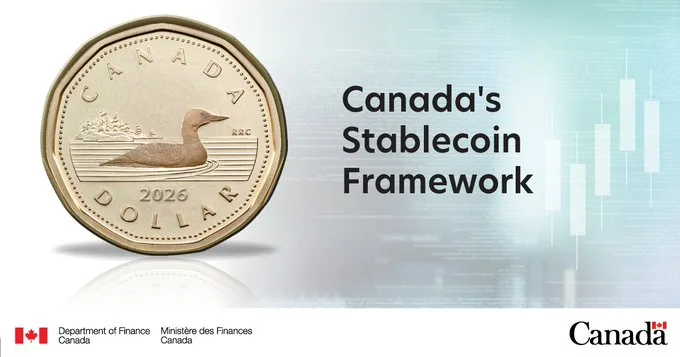
Canada has moved to build a federal framework for fiat-backed stablecoins after the Department of Finance Canada said the sector lacks comprehensive issuance rules. Through Budget 2025 and Bill C-15, the government will require issuers to hold full reserves, offer redemption at par, and meet governance and data security standards. The framework will apply to domestic and foreign issuers and is expected to take effect in 2027.
Rules aim to support innovation and consumer protection
The Department of Finance Canada said the framework seeks to promote “safe innovation and competition in the financial sector” while protecting consumers. It said the rules will help financial technology companies issue stablecoins in a regulated and predictable environment.
The report said Canadians now use fiat-backed stablecoins mainly as a store of value when trading crypto and as a bridge to the traditional financial system. It added that the new regime could support broader payment use, including international transfers, by improving public confidence.
The framework follows recent policy moves in other major markets. The report pointed to the United States’ GENIUS Act, enacted in August 2025, and the European Union’s MiCA regime, fully adopted in 2024. It said Canada designed its model to align with those systems and with Financial Stability Board recommendations.
Reserve, redemption, and governance rules
Under the proposed law, non-financial institution issuers will need to register with the Bank of Canada and provide ongoing information. They will also face prudential requirements supervised by the central bank.
Issuers will need to keep a 1:1 reserve of high-quality liquid assets in the same currency as the stablecoin reference. They must hold those assets with a qualified custodian, segregate them from other assets, and protect them from creditor claims in an insolvency.
They will also need to publish and follow a redemption policy that explains timing, method, fees, and any role played by third parties. In addition, issuers must establish policies for corporate governance, risk management, data security, and recovery and resolution.
The framework also bars issuers from offering interest or yield to stablecoin holders. It also bars claims that a stablecoin is legal tender, a deposit, or insured under a public deposit insurance system.
Related: Canada Moves to Regulate Stablecoins Under 2025 Budget Plan
Scope, oversight, and next steps
What will the new rules change for issuers and users in Canada?
The framework will cover only the issuance of fiat-backed stablecoins by non-financial institutions. Banks, credit unions, and other prudentially regulated financial institutions already operate under broader oversight. Other stablecoins that are not fiat-backed will remain under provincial or territorial securities regulation.
The Bank of Canada will administer the framework and supervise issuers. The Department of Finance will continue to lead policy and legislative development. The Stablecoin Act also gives the Minister of Finance authority to respond to public interest and national security risks, with support from security and intelligence agencies.
The report said issuers will remain subject to anti-money laundering and anti-terrorist financing rules under the Proceeds of Crime (Money Laundering) and Terrorist Financing Act because they qualify as money services businesses dealing in virtual currencies. For breaches, the Bank of Canada may use compliance agreements and administrative monetary penalties.
With Royal Assent now in place, the Department of Finance has started drafting supporting regulations with the Bank of Canada. Draft rules will go to the Canada Gazette for consultation. The report said that process should run for 12 to 18 months from early 2026.