
Japan Bond Yields Hit 25-Year High as Oil Crisis Deepens


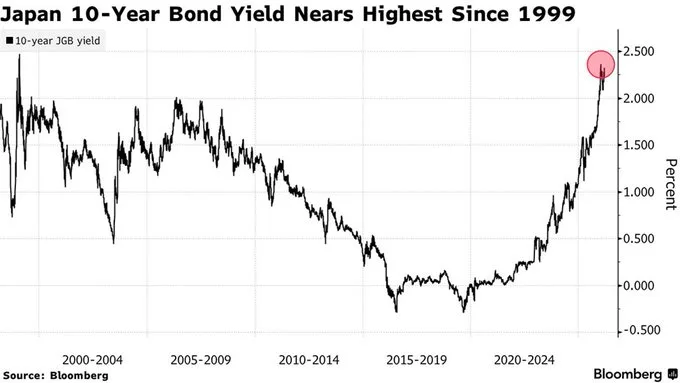
- Japan’s 10-year bond yield reached 2.30%, the highest level recorded since 1999.
- Rising oil costs and firmer inflation expectations are reshaping rate outlooks fast.
- Higher domestic yields may pull capital home and unsettle global asset markets abroad.
Japan’s 10-year government bond yield rose to 2.30%, its highest level since 1999, as oil prices climbed and inflation concerns deepened. The move marked a sharp break from Japan’s long era of ultra-low rates. It also pushed yields 30 basis points above the peak seen during the 2008 global financial crisis. Bloomberg reported that investors are now pricing in longer-lasting inflation and tighter policy conditions.
Yield Surge Signals a Market Reset
Japan’s bond market is showing a major shift after years of unusually low borrowing costs. For decades, the country relied on loose monetary policy to support growth and fight deflation. Now, rising prices are changing that picture.
The jump in yields points to a clear change in investor expectations. Markets now see a greater chance that the Bank of Japan may keep tighter conditions in place for longer. As a result, the 10-year yield has climbed to levels last seen in the late 1990s.
Source: X
Bloomberg reported that the rise reflects broader concern over inflation and policy direction. Investors are also reacting to a weaker low-rate framework that once defined Japan’s financial system. In turn, the bond market is moving more freely than before.
Reduced intervention has also played a role in the recent move. With less pressure holding yields down, the market has gained room to reprice risk. That has added momentum to the jump in rates.
Oil Prices Add to Inflation Pressure
The rise in yields has come alongside a sharp increase in energy costs. Oil prices surged after a disruption around the Strait of Hormuz tightened supply conditions. That shock added to inflation concerns in Japan.
Higher fuel costs are already affecting households and businesses. Gasoline prices have climbed, putting added strain on daily spending and operating costs. Those pressures have fed expectations of stronger inflation ahead.
Prime Minister Sanae Takaichi has responded with plans to release about 80 million barrels from strategic reserves starting this week. The government aims to ease supply pressure and soften the hit from rising energy prices. The measure targets both consumers and businesses facing higher costs.
Even so, markets remain uneasy. Bond yields eased slightly to around 2.28% on Tuesday, yet analysts still warn that volatility may continue while the energy crisis lasts. Bond prices have also fallen as investors adjust to the risk of higher inflation and interest rates.
Related: Japanese Yen Rallies as Iran Conflict Jolts Global Markets
Global Investors Are Watching Closely
The move in Japanese yields could affect markets well beyond Japan. Higher domestic yields often attract funds into government bonds and away from riskier assets. That shift may reduce liquidity in equities and cryptocurrencies.
For digital assets, the change matters because traditional fixed-income returns are becoming more attractive. Some investors may rotate out of speculative markets as safer returns improve. Still, crypto adoption continues to depend on broader financial and technology trends.
Japanese investors also hold trillions of dollars in overseas assets. If higher domestic yields pull that capital home, global markets could feel the impact. Overseas bond yields could rise as capital flows shift.
The wider economic backdrop adds more uncertainty. Analysts warn that the oil shock could raise stagflation risks across energy-importing parts of Asia. Global markets have already started to react as investors reassess risk.
One question now hangs over the market: will Japan move further away from the policy framework that kept rates low for decades?