KuCoin Secures Tomorrowland Crypto Payments Deal Through 2028

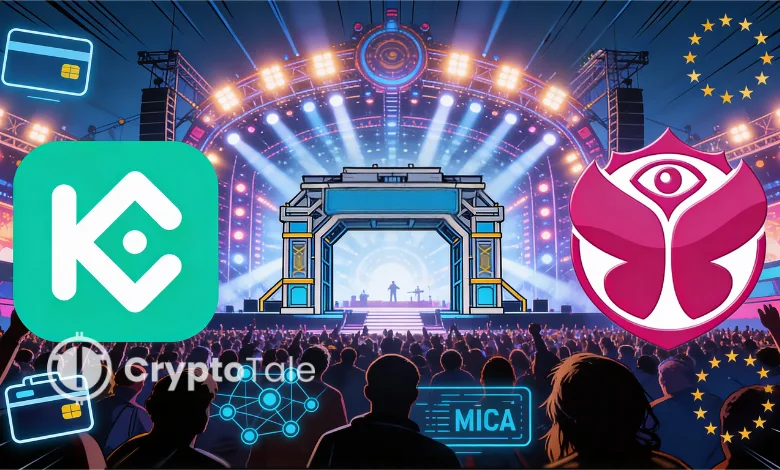
- KuCoin becomes Tomorrowland’s exclusive crypto and payments partner from 2026 to 2028.
- The deal follows KuCoin’s MiCA license, enabling regulated crypto payments across the EU.
- Crypto payments would integrate into tickets, merch, and food without disrupting fans.
KuCoin has announced a multiyear partnership with Tomorrowland Winter and Tomorrowland Belgium. The agreement runs from 2026 through 2028. Under the deal, KuCoin becomes the festival’s exclusive crypto and payments partner. The announcement follows KuCoin’s recent European Union regulatory approval and signals a move toward regulated, real-world payment use.
The partnership covers Tomorrowland Winter 2026 in Alpe d’Huez, France, and Tomorrowland Belgium 2026 in Boom, Belgium. KuCoin said the same structure would apply to future editions through 2028. The exchange stated that the arrangement goes beyond sponsorship and focuses on payment infrastructure inside the events.
KuCoin Leverages MiCA License to Deploy Crypto Payments in Europe
The deal was announced weeks after KuCoin EU Exchange obtained a crypto asset service provider license in Austria. The license was granted under the European Union’s Markets in Crypto-Assets Regulation. This approval allows KuCoin’s European subsidiary to operate across 29 European Economic Area countries under a single regulatory framework.
MiCA establishes common rules for crypto exchanges, custody providers, and stablecoin services across the EU. KuCoin said the authorization gives it a regulated base in Europe as the new rulebook comes into force across member states.
KuCoin said its role as exclusive payments partner involves integrating crypto rails into Tomorrowland’s existing systems. These systems include ticketing, merchandise sales, and food and beverage purchases. The exchange said the goal is to support payments without disrupting the festival experience.
A KuCoin spokesperson told Cointelegraph that crypto functions would operate in the background. The company aims to keep the payment process simple for users. Festivalgoers are not expected to navigate complex wallets or unfamiliar transaction flows during the events.
KuCoin did not disclose which digital assets would be supported on the site. It also did not confirm whether transactions would settle directly on-chain. The company said security standards and compliance with EU requirements guide the design of the payment setup.
Security, Compliance Take Priority After Tomorrowland’s Past Crypto Setback
The spokesperson emphasized advanced security measures and multilayer protection. These elements were described as essential for using crypto beyond trading platforms. KuCoin said its approach reflects its broader focus on trust and regulatory alignment.
Tomorrowland has previous experience with crypto partnerships. In 2022, the festival announced a Web3 collaboration with FTX Europe. That initiative included plans for NFTs and digital engagement tools before FTX collapsed later the same year.
Related: KuCoin Gains AUSTRAC Approval as It Expands in Australia
The earlier failure placed greater attention on partner selection and user protection. KuCoin’s MiCA license addresses regulatory gaps that existed at the time of the FTX deal. The current partnership places compliance and oversight at the center of the collaboration.
KuCoin said it is not setting public targets for transaction volume or user adoption. Instead, it defines success as smooth integration into the festival’s operations. The company said the aim is to show that digital assets could function as practical financial tools.
The exchange described its objective as moving crypto from niche use cases toward mainstream utility. It framed the Tomorrowland deal as a demonstration of regulated crypto infrastructure in live events.
In late November, KuCoin confirmed it had secured its MiCA license through its Austrian subsidiary. The authorization enables the company to provide digital asset services across the European Economic Area. KuCoin said the approval reflects compliance with the EU’s evolving crypto framework.
The Tomorrowland agreement illustrates how KuCoin plans to use its European regulatory status. The company is linking licensed crypto services with global cultural events. The partnership aligns crypto payments with established consumer platforms under EU regulatory standards.