
Nasdaq Pushes for SEC Greenlight on Yes-or-No Index Contracts

- Nasdaq files with the SEC to launch binary options tied to the Nasdaq 100 Index market.
- Contracts trade from $0.01 to $1 and settle at $1 if the defined outcome occurs fully.
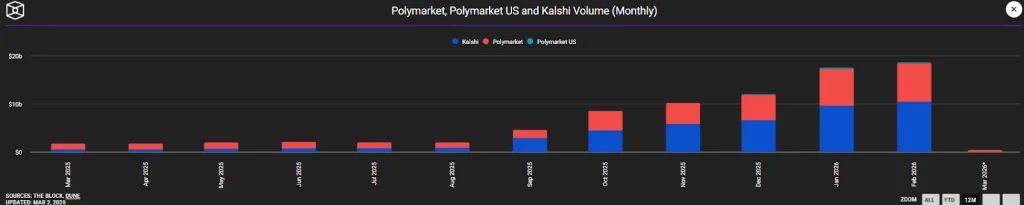
- Prediction market volumes reached $18.4B in February as oversight debate intensified.
Nasdaq has formally asked the U.S. Securities and Exchange Commission to approve a new class of binary options tied to its flagship Nasdaq 100 Index. Per reports, the proposal would allow traders to take simple yes-or-no positions on whether a defined outcome occurs, marking a direct entry into the fast-growing prediction-style trading space.
The exchange disclosed the filing in a rule change submission that outlines what it calls “Outcome Related Options.” If approved, the contracts would trade as listed securities options under SEC oversight. The move would shift event-style trading from standalone prediction platforms into the traditional equity index options market.
How the Proposed Contracts Would Work
Under the filing, the new instruments would be linked to both the Nasdaq 100 Index and its micro version. Each contract would trade between $0.01 and $1. The price would then reflect the market’s assessment of the probability that a specific event will occur.
If the defined outcome takes place, the contract would settle at $1. If it does not, the option would expire worthless. The fixed payout structure mirrors the binary framework widely used by platforms such as Polymarket and Kalshi.
Unlike traditional options, these contracts would not involve complex strike prices or payoff curves. Instead, they would provide a straightforward probability-based position within a regulated exchange structure.
Bringing Prediction-Style Trading Into Regulated Markets
The regulatory classification is central to the filing. Many existing event-style contracts operate under the Commodity Futures Trading Commission. By contrast, Nasdaq’s proposal would subject these options to SEC oversight as securities products.
The distinction matters because it determines which agency sets disclosure standards and oversees trading rules. SEC Chair Paul Atkins recently described prediction markets as a “huge issue,” pointing to potential overlap between the SEC and the CFTC.
By seeking approval within the established options framework, Nasdaq effectively brings the jurisdiction debate into the core of the listed derivatives market. The contracts would trade alongside existing equity index options, subject to established reporting and compliance requirements.
Record Volumes Signal Growing Demand
The filing arrives as prediction markets post record activity. Combined monthly trading volume across Kalshi and Polymarket reached about $18.4 billion in February, according to The Block’s data dashboard. January had set the previous record at just over $17 billion.
Source: The Block
That marks six consecutive months of new highs. Similarly, the surge underscores rising interest in event-based trading structures that offer defined payouts and simplified exposure. Meanwhile, other exchanges are positioning around the same trend.
Cboe Global Markets has said it is exploring the revival of “all-or-nothing” binary options tied to financial benchmarks. Likewise, CME Group continues to expand access to crypto derivatives as demand for continuous trading grows.
Related: Trump Media Weighs Truth Social Spin-Off as Cryptocurrency Grows
A Strategic Shift for Nasdaq
If the SEC approves the rule change, Nasdaq would enter the prediction-style market through its established index franchise. The proposal would represent its first direct offering of binary outcome contracts within the listed options ecosystem.
However, the exchange’s approach differs from standalone platforms by embedding fixed-payout instruments into a regulated exchange environment. That structure could attract market participants seeking event-based exposure under traditional securities oversight.
For now, the filing awaits SEC review. The decision will determine whether yes-or-no index contracts become part of the mainstream exchange-traded options landscape under Nasdaq’s banner.