
Norges Bank Pauses CBDC Plans, Keeps Options Open

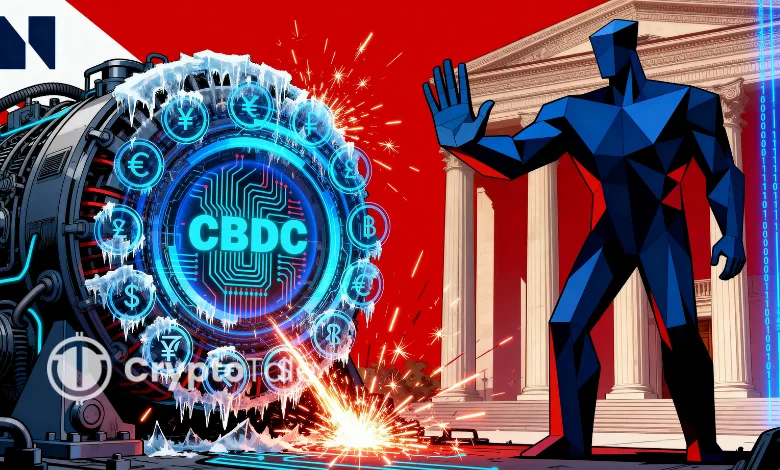
- Norges Bank delays CBDC launch, citing Norway’s efficient and secure payment system.
- Governor Bache states that CBDC needs may arise in the future as global conditions change.
- Norges Bank to explore tokenized systems, monitoring global CBDC developments closely.
Norway’s central bank has announced that introducing a central bank digital currency (CBDC) is “not warranted at this time.” The decision marks a shift in the country’s approach to digital currencies. The central bank believes Norway’s existing payment system is already secure, efficient, and cost-effective. However, Norges Bank remains open to the possibility of a CBDC in the future.
Governor Ida Wolden Bache emphasized that while there is no immediate need for a CBDC, the situation could change. “The need for such a currency may, however, change in the future,” she said. Bache’s statement reflects a cautious but flexible approach to digital currency, leaving room for future exploration if the need arises.
Norges Bank’s CBDC Research and Trials
This move also comes up following many years of researching and experimenting with CBDC designs. Norges Bank has been exploring both retail and wholesale CBDCs, running a series of payments experiments with tokenized settlement on blockchain platforms.
The bank took part in Project Icebreaker in 2023, an experiment to trial new designs for cross-border retail CBDC transactions. The joint project aimed to investigate how various nations could use CBDCs for transactions more safely, quickly, and cost-effectively. Norges Bank is upbeat about these trials, but remains cautious on whether CBDCs could work in the wild.
Norway’s Norges Bank is not averse to wholesale CBDCs, which might enable more modern interbank payments. Regulators note, however, that CBDCs remain untested opportunities. It is also a major issue, owing to the poorly developed existing infrastructure and international standards that prevent uniform adoption of CBDCs.
In recognizing global research on CBDCs, the central bank said that in most countries, research into digital currencies is still at a relatively early stage. The Eurosystem, for instance, is discussing the potential issuance of a digital euro even though the infrastructure required does not yet exist. Norges Bank wrote that global cooperation on CBDC infrastructure would become more likely if several central banks introduced a digital currency.
Despite the delay in adopting a CBDC, Norges Bank is committed to exploring other digital solutions. The bank believes that tokenized systems could drive innovation, increase efficiency, and lower settlement risks.
Related: South Africa Sees No Immediate Need for Retail CBDC
Norges Bank Advances Tokenization Experiments and CBDC Research
The central bank will continue experimenting with tokenized systems. These experiments would also include joint activities with other participants in the payment system around real-world use cases of these technologies. Norges Bank is resolute in its intention to explore blockchain technology, but would proceed with caution regarding the introduction of CBDC.
A publication is projected for the first quarter of 2026 that would report on Norges Bank’s studies of CBDC. The document would detail what the bank has found to date in its research and what it intends for future CBDC work. The Bank would continue to follow international developments, in particular those related to the Eurosystem’s digital euro.
The ECB, meanwhile, is also progressing with its plans for a CBDC, with the digital euro project entering into its second phase. The ECB believes it could launch the digital euro as early as 2029 if the proper legal framework is in place. The pilot projects might start in 2027, and, if successful, could set the stage for a launch in 2029.
Norges Bank’s decision not to rush into CBDC implementation highlights its cautious approach to emerging technologies. While the central bank does not see the immediate need for a CBDC, it remains open to the possibility of future adoption if necessary.