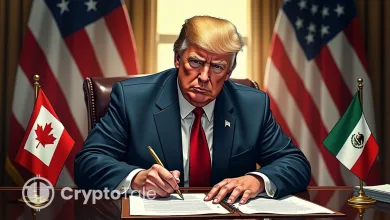
Trump’s Hormuz Escalation Sends Oil Prices Sharply Higher


- Oil topped $104 as Trump’s Hormuz blockade threat rattled markets and fuel costs.
- Stalled Iran talks and tanker disruptions deepened fears of a broader energy shock.
- Falling ship traffic through Hormuz raised pressure on gas prices and stock futures.
Oil and gas prices surged after President Donald Trump moved to blockade the Strait of Hormuz and negotiations with Iran broke down. U.S. crude rose 8% above $104 per barrel. Brent climbed more than 7% to $103. Stock futures also fell, with Dow futures down more than 500 points as traders priced in a deeper energy shock.
The warning from Iran’s parliament speaker — essentially telling Americans to “enjoy” current gas prices before they spiral — is not just a taunt. It is a direct reflection of how quickly geopolitical decisions, particularly those tied to war and failed diplomacy, are feeding into global energy markets.
At the center of this escalation is Donald Trump and his administration’s decision to initiate military action against Iran and subsequently abandon fragile negotiation pathways. What began as a strategic show of force has evolved into a full-scale economic ripple effect, with oil markets acting as the first and most sensitive pressure point.
Trump’s Move Sends Oil and Gas Higher
Iran’s parliament speaker, Mohammad Bagher Ghalibaf, warned Americans to “enjoy” current gas prices and said they may soon miss $4 to $5 fuel. His remark came as tensions rose and peace efforts weakened. The warning matched a market already moving sharply higher.
Trump then said the United States Navy would begin the process of blockading ships entering or leaving the Strait of Hormuz. He also said the Navy would seek and interdict vessels in international waters that had paid a toll to Iran. Those statements pushed supply fears to the front of the market.
Wholesale gasoline prices rose 6% in early trading. Heating oil, which traders use as a jet fuel proxy, jumped 10%. At the same time, futures tied to the S&P 500 fell 1%. Nasdaq 100 futures dropped 1.3%, while Dow futures lost more than 500 points.
Strait of Hormuz Becomes the Market’s Pressure Point
The Strait of Hormuz remains one of the world’s key energy chokepoints. Before the war, hundreds of ships crossed it each day. Since the war began on February 28, fewer than 10 ships a day have passed on most days. That drop cut directly into the flow of oil and gas.
Last week, only 24 ships exited the strait toward the open ocean. On Friday, only two ships passed through, according to S&P Global Market Intelligence data shared with NBC News. Neither ship carried oil or gas. The traffic data showed how sharply the route had slowed.
JPMorgan Chase commodities analysts said reopening the strait had become the market’s most time-sensitive priority. They said the last tanker to clear Hormuz on February 28 should reach its destination around April 20. After that date, they said, pre-closure barrels would no longer cushion the global supply chain.
Related: Trump’s Gaza Peace Board Faces Cash Crunch Claims, Officials Deny Shortfall
Halted Talks Deepen the Economic Fallout
Trump announced the blockade move after Vice President JD Vance, special envoy Steve Witkoff, and Jared Kushner flew to Islamabad for talks with Iranian leaders during a two-week ceasefire. The trip pointed to a diplomatic opening. Yet the blockade order pulled the crisis back toward confrontation.
What happens when war policy collides with one of the world’s most important oil routes?
The market reaction tied that question to immediate costs. Higher oil prices raised the risk of higher fuel bills, transport costs, and pressure across supply chains. The sequence in the text linked the surge not only to war, but also to the collapse of negotiations that might have eased the strain.