Uniswap Votes on 100M UNI Burn and New Fee Switch Proposal

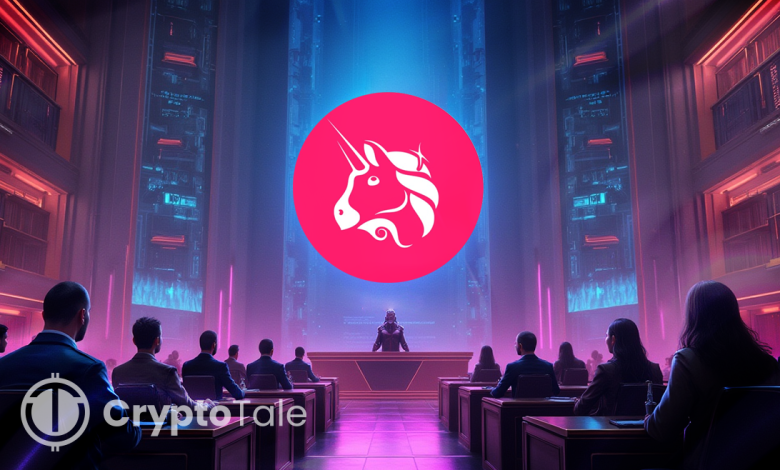
- Uniswap’s UNIfication proposal votes on burning 100M UNI and activating a fee switch.
- Fee-burning mechanism on v2 and v3 aims to tie protocol revenue directly to UNI value.
- Legal contract under DUNA law formalizes governance between Uniswap Labs and the protocol.
Uniswap governance has reached a decisive moment. On Dec. 18, 2025, Uniswap founder Hayden Adams announced that the UNIfication proposal was posted on-chain and would go live for voting on Dec. 19, 2025. The proposal will remain open until Dec. 25, providing token holders almost a week to cast votes.
Adams highlighted the stakes in a social media post, saying that a successful vote would allow major actions after a two‑day timelock, including burning 100 million UNI, activating fee switches for Uniswap v2 and v3 pools, and diverting Unichain sequencer fees to the burn mechanism.
He urged delegates to participate before the holiday, warning that inaction could leave them on “Santa’s naughty list. The final vote follows months of discussion and a Request for Comment (RFC).
Proposal Details: 100M UNI Burn and Fee Mechanism
Uniswap Labs and the Uniswap Foundation jointly propose burning 100 million UNI tokens from the treasury. This retroactive burn is designed to approximate the amount that might have been burned if protocol fees had been active since UNI’s launch.
Eliminating such a large portion of the token supply would reduce UNI’s total circulating supply from roughly 630 million to about 530 million, according to market analyses.
The vote also seeks to activate the long‑debated fee switch on the Ethereum mainnet. Currently, all swap fees go to liquidity providers. Under the proposal, 0.05 percentage points of Uniswap v2 fees would be redirected to a new token jar smart contract, while v3 pools would contribute between one‑quarter and one‑sixth of their fees.
Anyone who burns UNI tokens could withdraw an equivalent amount of crypto from the token jar, effectively reducing supply and tying token value directly to protocol revenue. Additionally, the proposal directs all Unichain sequencer fees, after costs and allocations to the Optimism chain, into the same burn mechanism.
Uniswap’s plan includes a Protocol Fee Discount Auction (PFDA) to compensate liquidity providers and internalize miner‑extracted value (MEV). By auctioning the right to trade without paying protocol fees, Uniswap intends to send winning bids to the burn contract.
Governance Alignment and Legal Framework
Beyond economic adjustments, the UNIfication proposal addresses Uniswap’s organizational structure. The plan recommends transferring most Uniswap Foundation functions—ecosystem support, governance facilitation, and developer relations—into Uniswap Labs.
In return, Labs would end interface, wallet, and API fees and contractually commit to pursuing only initiatives that align with DUNI, the legal entity representing Uniswap governance. This commitment would be captured in a services agreement executed alongside the vote.
Legal certainty comes from Wyoming’s Decentralized Unincorporated Nonprofit Association (DUNA) law. Uniswap governance adopted this framework earlier in 2025, forming DUNI as a legally recognized entity that wraps on‑chain governance. DUNA allows DAOs to own property, sign contracts, and obtain liability protections while preserving decentralization.
According to the UNIfication plan, Uniswap Labs would be subject to a binding services agreement with DUNI that is valid under Wyoming law. This is supposed to ensure that Labs’ operations are always in line with the interests of the token holders. It is expected that the use of the DUNA framework, along with on-chain governance, would help create a bridge between decentralized decision-making and off-chain enforceability.
Related: Uniswap Launches CCA for Better Price and Token Liquidity
Community Reaction and Market Context
The Uniswap proposal has raised questions in the DeFi space. Proponents of the measure believe that burning tokens and taking fees from the protocol would allow the UNI price to be more directly tied to the success of Uniswap and could help push the price higher.
Since there has been over $4 trillion in volume on the site, small fees could add up to a substantial amount of money.
Market reaction has been positive so far. Reports indicate that UNI’s price rose about 5 % to around $5.23 after the vote was announced. Trading volume also spiked more than 80%. News outlets note that investors are positioning ahead of the vote, anticipating a potential supply squeeze if the bill passes.