Russia Acknowledges Bitcoin Mining Impact on Ruble Exchange

- Russia’s central bank now acknowledges bitcoin mining as a factor supporting ruble flows.
- Officials say mining revenues bypass reporting systems, complicating forecast models.
- Russia plans tighter crypto rules, keeping mining industrial while routing trades via licensed.
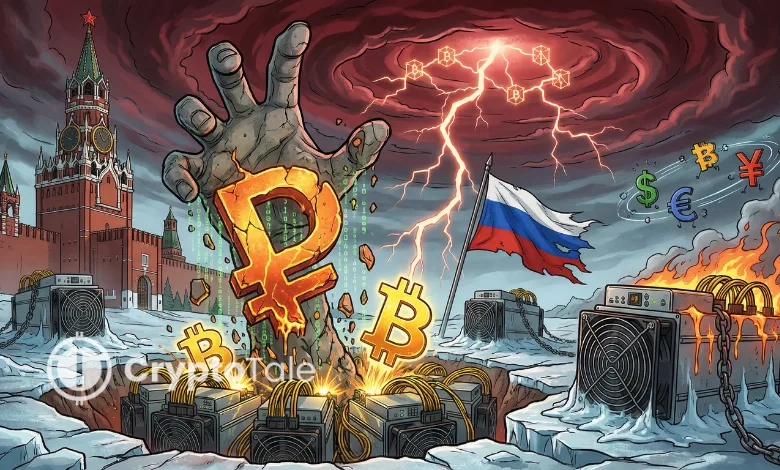
Russia has begun to publicly acknowledge Bitcoin mining as a factor influencing the ruble. The signal came from Central Bank Governor Elvira Nabiullina during a recent press briefing. Her remarks marked a shift from skepticism toward conditional recognition. The focus now centers on control, visibility, and regulation.
Nabiullina addressed a question from an RBC journalist about mining and currency strength. She said cryptocurrency mining could support the ruble’s exchange rate. However, she stressed that the impact remains hard to measure. Much of the mining sector still operates outside formal reporting channels.
She explained that mining activity did not suddenly appear in 2025. Therefore, it cannot fully explain the recent ruble appreciation. Still, she acknowledged that mining plays a supporting role. The sector adds pressure on foreign exchange flows.
Her comments echoed earlier remarks from senior government officials. At the VTB “Russia Calling!” forum, Maxim Oreshkin raised similar concerns. Oreshkin serves as Deputy Chief of Staff of the Presidential Executive Office. He said officials underestimated crypto-related financial flows.
According to Oreshkin, that underestimation distorted earlier ruble forecasts. He described cryptocurrency and mining revenues as a new export category. These flows influence the foreign exchange market. However, they often bypass traditional monitoring systems.
Oreshkin said the government must reflect these flows in balance of payments data. He noted that low transparency complicates accurate modeling. Mining revenues move across borders without standard documentation. This makes tracking difficult for regulators and economists.
Bitcoin Mining Emerges as a Quiet FX Factor
Nabiullina confirmed that the Central Bank now assesses the mining sector more closely. She said the regulator understands its macroeconomic relevance. However, she cautioned against overstating its effect. Mining contributes alongside many other forces.
She described mining as one of several supporting factors behind ruble strength. Energy exports, capital controls, and trade adjustments also play roles. Mining adds incremental foreign currency inflows. These inflows affect supply and demand dynamics.
Russia has expanded mining activity due to low energy costs. Sanctions also pushed firms toward alternative revenue channels. Bitcoin mining offered one such channel. Over time, it grew into a measurable economic input.
Officials now frame mining less as a speculative activity. Instead, they describe it as an industrial process. It converts surplus energy into digital assets. Those assets then enter global markets.
Related: Russian Court Review Set to Define Stablecoin Property Status
Regulation Shifts Toward State-Managed Access
While acknowledging mining’s role, regulators are tightening controls. Last week, First Deputy Central Bank Chairman Vladimir Chistyukhin outlined the next steps. He said the crypto sector requires urgent cleanup, calling for stricter laws and enforcement.
Chistyukhin emphasized the need for clear legal boundaries. He said authorities must pass restrictions and prohibitions quickly. The goal centers on transparency and compliance as officials aim to reduce risks tied to money laundering.
The Central Bank now coordinates with several agencies. These include the Ministry of Finance and Rosfinmonitoring. Together, they are drafting a regulated framework focusing on licensed intermediaries.
Under the proposal, crypto transactions would flow through approved market participants. These entities already hold financial licenses. This approach mirrors traditional capital market structures. It allows monitoring and enforcement.
Officials aim to shift crypto activity away from informal channels. They want institutional oversight instead. This includes reporting requirements and compliance checks. AML controls remain a central priority.
For now, mining sits between tolerance and regulation. Authorities no longer dismiss its impact. Instead, they measure, manage, and contain it. The ruble’s strength has added urgency to that reassessment.