
From Vision to Void: The Story of Sam Bankman-Fried

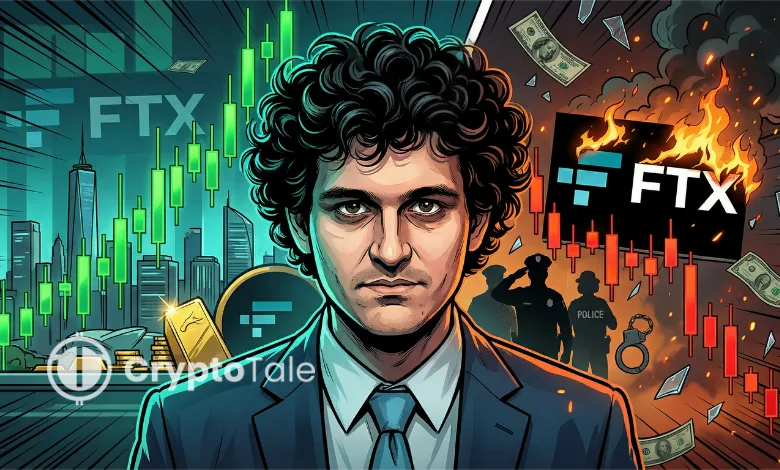
Sam Bankman-Fried, commonly referred to as SBF, is one of the most significant and controversial figures in the cryptocurrency era. His rise carried brilliance and ambition, and his downfall carried results that shook every corner of the cryptoworld. For a short period, he was presented as the standard for how modern wealth, regulation, and progress could align. However, behind the scenes of his rise, the pressure was mounting, and by the time that it blew up, the shock changed the future of centralized exchanges forever.
A Mind Shaped by Logic
SBF was born in 1992 to two Stanford law professors. His childhood was a trend: he was rational rather than emotional, focused on systems rather than narratives, and on numbers rather than anything else. The worldview he created around thinking led him to later transform into the image of a genius on stage, whose sole aim in life was to make a difference.
Even before expectations were vested in him, he was only a little mathematician trying to find his way. While studying at MIT, he became involved with “effective altruism,” a philosophical movement partly influenced by Peter Singer’s utilitarian school. The movement argues that large-scale wealth accumulation is morally justified when its purpose is to fund high-impact projects that can improve or save lives. In his view, aggressively earning was not a contradiction of altruism but a necessary strategy for maximizing positive outcomes through data-driven philanthropy.
His entry into the world market was his first job at Jane Street, a quantitative trading firm, where he learned how markets work when liquidity disappears, how a seemingly insignificant miscalculation can have a significant impact, and how to trade when the world moves fast. The experience he gained shaped the basis of his risk-taking and made him want to create systems more efficient than those he operated within.
The Rise of Alameda and FTX
In 2017, SBF regarded crypto not as a culture but as a new financial revolution to be conquered. He founded Alameda Research, a trading company that exploited price differences across global markets. His catalyst was the now-infamous “Kimchi premium,” which is buying BTC in other countries at lower prices and selling it at higher prices in South Korean exchanges. Alameda made profitable, high-volume, and fast arbitrage deals. These actions provided SBF with something much better than capital: a feeling that the crypto ecosystem rewarded speed and boldness, rather than perfection.
Out of this came FTX, founded in 2019. A small-scale trader among advanced traders soon became an international arena of trust for millions. The architecture of FTX was more reliable, faster, and cleaner than that of its competitors, and SBF’s public approach helped it soar. He was seen on magazine covers, testified before Congress, and donated tens of millions to politics. SBF managed to make himself the exception.
If we can build a platform that not only serves people financially, but also gives them the trust and access they couldn’t otherwise have – that is worth the hard work. – Sam Bankman-Fried
FTX secured partnerships with major sports teams, celebrities, and institutional investors. The company was valued at up to $32 billion, and SBF was among the youngest billionaires in the world. Another side of his personality was his promotion of effective altruism, the philosophy of earning to give. He talked of how he would save the world, how he would fund pandemic response machineries, and how he would resolve political inefficiencies. To a great extent, he was the unique, young founder who fused ambition with a moral purpose. However, this vision was a disguise of a structural break that was taking shape under the empire.
On the other hand, Alameda became increasingly volatile in its aggressive trading, despite its early success. By May and June 2022, the firm’s losses increased as the market declined, and instead of absorbing them openly, it used the backdoor of FTX’s customer funds. The boundary between the third party and the trading company was lost, not by chance, but by design. The FTT token, which FTX designed, was used as collateral for loans, pegging billions of dollars to a token owned by SBF himself.
The Crash That Shook the Crypto World
The pressure surfaced in November of 2022. A report showed that FTT was a strong support for Alameda’s balance sheet. Fears were spreading in markets, and the situation worsened by CZ’s announcement that it would sell its FTT holdings. FTX withdrawals shot up. But the events that followed changed the investors’ view of FTX. The savings were not there. It was empty. FTX, which was once a market favorite, ended up in a historic liquidity crisis. The empire of SBF, which was once praised as the classy alternative to the disorderly rivals, collapsed as it were.
SBF was arrested in The Bahamas and handed over to the U.S. government in December 2022. Months of evidence and research created a portrait of a founder who knew markets well but underestimated the importance of genuine trade between exchanges and the investors. Prosecutors presented his actions as intentional fraud, but SBF claimed they resulted from poor judgment, faulty calculations, and overconfidence. Depending on how they were interpreted, the effects were apparent.
A turning point in the trial came when his longtime colleague and former girlfriend, Caroline Ellison, took the stand. She testified in detail about Alameda’s practices, the misuse of FTX customer funds, and SBF’s involvement, statements that sharply contradicted his defense narrative. Her cooperation with prosecutors was widely viewed as one of the most damaging moments for SBF, shaping the jury’s internal decisions and redirecting the case against him. Ellison was not the only one; Gary Wang, co-founder of FTX, and Nishad Singh, who was the director of engineering at FTX, also testified against him. He was sentenced to 25 years in jail in 2024, a sentence that underscored his failure as one of the most significant financial collapses in modern history.
We understand how badly we let people down. We messed up – in a big way – Sam Bankman-Fried
His legacy is still marked with debates in the aftermath. Supporters believe he was lost in the FTX expansion and got trapped in the organizational breakdowns, and not intentional actions. Critics cite the vanity of spending customer money, the deficiency of controls within the company, and the inconsistency of his statements of altruism and personal choices.
The SBF story is not just a warning tale. It is a mirror of the revolution in an industry that was overly dependent on personalities rather than systems. His early success underscored the strength of crypto’s frontier era, while his decline highlighted the need for transparency and risk separation. He was a genius and a hope to many, but also a threat to many. His absence from the ecosystem continues to remind people that innovation with no limits is quite tricky, regardless of the emotional story behind it.
Sam Bankman-Fried’s journey is not yet over. Even while he is in confinement, discussions about him continue to influence policy debates, investor expectations, and the development of blockchain infrastructure. His name remains prominent in conversations about trust, ambition, and accountability. As the lights dim on his chapter, a question waits in the next scene: Is his legacy caution or creation?