Aave Founder Says DAO Revenue Hit $140M, Vote Claims Denied

- Aave DAO generated $140M in 2025 as the brand control proposal failed in a December vote.
- Stani Kulechov denied using recent AAVE buys for voting power amid governance concerns.
- Vote data showed concentrated power; top holders controlled 58% of total participation.
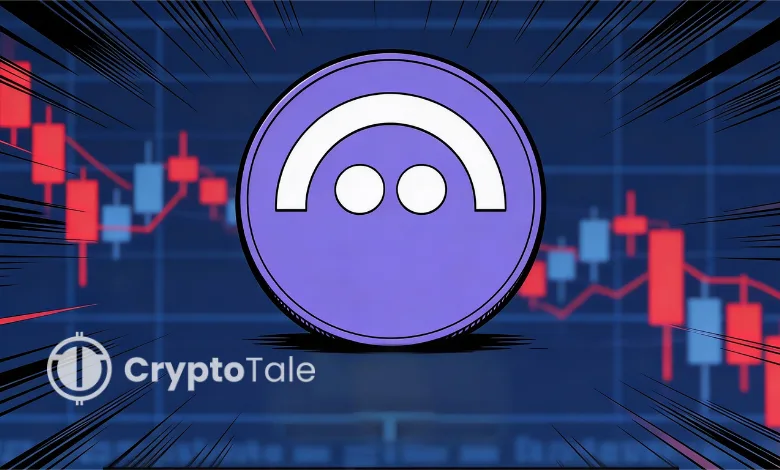
Aave’s founder publicly addressed internal governance tensions after a DAO vote ended, revealing record revenue and disputed token purchases. The comments came on X after a December DAO vote rejected a proposal on brand asset control. Stani Kulechov explained why the vote failed, how the DAO earned $140 million this year, and why his AAVE purchase did not influence voting.
DAO Revenue Reaches $140 Million
Kulechov stated that the Aave DAO generated $140 million in revenue during 2025, exceeding the previous three years combined. He emphasized that AAVE token holders control the treasury holding these funds. Notably, he said this detail received little attention during recent governance debates.
According to Kulechov, the revenue milestone occurred as DAO members debated economic alignment between Aave Labs and token holders. However, he acknowledged that Aave Labs failed to clearly explain how its products create value for the DAO. He said the company plans to address this gap more directly going forward.
The revenue disclosure followed a rejected proposal seeking to transfer Aave brand assets to the DAO. Those assets included trademarks, social media accounts, repositories, and the aave.com domain. The proposal aimed to align economic risk with control, according to its supporters.
However, voting data showed limited backing. Snapshot results recorded 55.29% voting against the proposal, 41.21% abstaining, and 3.5% voting in favor. The vote closed in late December after several days of public debate across governance forums.
Alignment and Token Purchase Concerns
Following the vote, Kulechov addressed questions about his relationship with token holders and Aave Labs. He described the debate as productive, despite its intensity. He also stated that disagreement remains a normal feature of decentralized governance.
Kulechov committed to clarifying how Aave Labs activities benefit the DAO and AAVE holders. He said future disclosures would explain revenue flows, integrations, and product value creation more explicitly. However, he did not outline specific timelines or mechanisms.
Attention also focused on Kulechov’s recent $15 million AAVE purchase. Critics questioned the timing as the purchases occurred shortly before the vote closed. In response, Kulechov said he did not use those tokens to vote.
“These tokens were not used to vote on the recent proposal,” he wrote on X. He added that influencing the outcome was never his intention. He described the purchase as a personal investment tied to long-term conviction.
On-chain data showed the tokens were acquired at an average price near $176. The purchases occurred as AAVE’s price declined during the DAO dispute. However, no evidence showed that those tokens participated in the Snapshot vote.
Related: Wintermute Signals No Vote as Aave Governance Rift Deepens
Vote Fallout, Allegations, and Broader DAO Concerns
Despite Kulechov’s statement, skepticism persisted within the community. Some DAO members argued that optics and timing still mattered, even without direct voting use. Others focused on structural governance risks rather than the founder’s intent.
Wintermute founder Evgeny Gaevoy confirmed that his firm voted against the proposal. He later said he expects a clearer value capture proposal from Aave Labs next year. His comments followed the vote’s conclusion.
Additional criticism centered on voting power concentration. According to Snapshot data cited by DAO members, the top three voters controlled over 58% of total voting power. The largest voter held 27.06%, while aci.eth controlled 18.53%.
The proposal also raised questions about who actually wrote it. Former Aave Labs CTO Ernesto Boado was listed as the author, but he later said it moved forward without his approval, which hurt trust within the community.
At the same time, accusations surfaced about how fees were handled through a CoW Swap integration. A DAO member, EzR3aL, claimed some fees were sent to a wallet controlled by Aave Labs. These claims added to the backlash during the vote, even though the proposal was ultimately rejected by a wide margin.
Kulechov denied allegations that he controlled the vote outcome. He reiterated that the ecosystem supports multiple service providers. He also said Aave Labs would continue collaborating with teams building on the protocol.
The DAO vote ended without transferring brand control, but debate continued across forums and social platforms. Throughout, Kulechov maintained that clearer communication remains necessary.
Meanwhile, Aave’s DAO generated $140 million in 2025 while rejecting a proposal to shift brand control. Kulechov denied using his $15 million AAVE purchase for voting and pledged clearer alignment disclosures. The address combined record revenue, disputed governance processes, and unresolved questions about DAO communication.