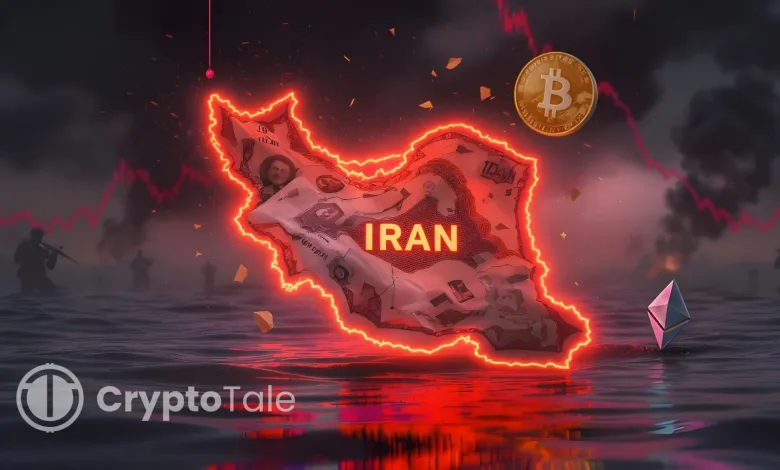
Iran Accepts Crypto Payments For Arms Export Evading Sanctions

- Iran accepts crypto payments for state arms exports amid sanctions pressure, as per reports.
- State defence exporter Mindex accepts cryptocurrency, barter or rials for missiles and drones.
- Policy shows how sanctioned economies use digital assets to bypass finance control.
Iran has formally offered cryptocurrency as payment for overseas weapons sales through a state-run defense exporter, Mindex. According to a Financial Times report, the policy has operated since 2025 and applies to missiles, drones and warships. The move targets buyers blocked from traditional finance, as sanctions restrict Iran’s banking access.
State Exporter Formalizes Crypto Payment Channels
Iran’s Ministry of Defence Export Center, known as Mindex, oversees the policy and manages overseas arms sales. According to the Financial Times, Mindex allows contracts to settle using cryptocurrency, barter, or Iranian rials. The option appeared in promotional materials reviewed by the newspaper and has remained active for about a year.
Mindex operates as a government-run export agency with reported client ties in 35 countries. Its catalog lists Emad ballistic missiles, Shahed drones, Shahid Soleimani-class warships, and air defense systems. Notably, it also offers rockets, ammunition, cruise missiles, and small arms through the same platform.
The Financial Times verified the exporter’s website using archived records, registration data, and technical analysis. The site runs on an Iranian domestic cloud provider already under U.S. Treasury sanctions. Washington has linked that provider to Iranian intelligence services.
To guide buyers, Mindex uses an online portal supported by a chatbot and a structured FAQ page. One entry directly addresses sanctions risks and contract execution. The agency states that Iran’s sanction-circumvention policies allow delivery despite financial restrictions.
Pricing details remain undisclosed; however, buyers may request in-person inspections inside Iran with security approval. Mindex also permits payments outside Iran, depending on negotiated terms. These conditions introduce the operational framework behind the crypto option.
Sanction Pressure and Alternative Settlement Methods
Western governments continue to enforce strict sanctions against Iran’s nuclear, missile, and oil sectors. The U.S., UK, and EU have limited Iran’s access to international banking and correspondent networks. As a result, Iranian state entities increasingly rely on barter systems and digital assets.
Last month, the U.S. sanctioned 29 vessels accused of helping Iran ship oil covertly. U.S. officials describe those operations as part of a broader financial shadow network. Cryptocurrency transactions have played a role in moving funds beyond regulated channels.
In September, the U.S. Treasury identified two Iranian nationals accused of handling over $100 million in crypto-linked oil transactions. Authorities said those transfers supported government sales between 2023 and 2025. Officials described the activity as systemic rather than isolated.
The Mindex payment structure reflects that broader pattern. By listing crypto alongside rials and barter, the exporter embeds digital assets into formal defense trade processes. According to the Financial Times, this represents one of the first public cases involving state-level weapons sales.
Meanwhile, European powers attempted renewed talks with Tehran during 2025. Those negotiations collapsed, prompting the UK, France, and Germany to trigger a UN sanctions snapback process. Despite added pressure, Iranian exports have continued.
Related: Iran Rial Collapse Triggers Protests as Currency Hits Record
Crypto Adoption and Iran’s Sanctioned Economy
Iran’s domestic cryptocurrency use has expanded alongside external trade experimentation. Estimates suggest that about five million Iranians actively trade digital assets. Inbound crypto volumes reportedly grew 11.8 percent year over year during 2025.
Several domestic exchanges operate inside Iran, including Nobitex, Bit24, and Excoino. In June 2025, hackers stole an estimated $80–$90 million from Nobitex. However, trading activity resumed, indicating continued reliance on digital assets.
Internationally, Iran remains a mid-tier arms exporter. According to the Stockholm International Peace Research Institute, Iran ranked 18th globally in major arms exports during 2024. Analysts at the Atlantic Council noted Iran’s expanding role as Russia’s export capacity declined.
Weapons linked to Iranian production have appeared in multiple conflict zones, according to Western governments and the United Nations. Some systems listed on Mindex’s platform resemble equipment recovered from Iran-backed groups. These findings provide additional context for export oversight concerns.
Mindex states that buyers must agree to usage rules, especially during conflicts with other states. However, the agency says parties can renegotiate those terms. The structure emphasizes flexibility within officially managed exports.
Meanwhile, Iran’s crypto payment option for weapons sales operates through a state agency, verified platforms, and formal contract terms. The policy shows sustained sanctions pressure, expanding crypto use, and documented enforcement actions by Western authorities. These elements describe how digital assets now function within Iran’s sanctioned trade system.