Russian Central Bank Plans to Explore Ruble-Backed Stablecoin by 2026

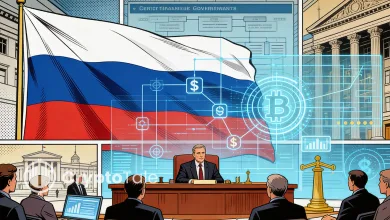
- Russia sets a 2026 review for a state-backed stablecoin amid shifting policy views.
- New crypto rules may pass this spring, giving markets clearer operating ground.
- Sanctions pressure and foreign frameworks push Moscow to explore digital options.
The Russian Central Bank is preparing to revisit an idea it has resisted for years: whether the country should issue a ruble-backed stablecoin. The shift surfaced during remarks by First Deputy Chairperson Vladimir Chistyukhin at the Alfa Talk conference in Moscow, where he confirmed that a full study is scheduled for 2026.
His comments, relayed by TASS, mark one of the clearest signs that the regulator is opening the door, if only slightly, to a tool it once dismissed outright. Chistyukhin said the review will reassess earlier objections, noting that developments abroad now warrant a closer look.
Once the research is complete, the findings will be put out for public discussion, giving lawmakers and markets their first formal window into the bank’s evolving position.
A Policy Reassessment After Years of Resistance
The Russian Central Bank spent years warning against the circulation of private digital assets, insisting that the digital ruble would be the only acceptable state-aligned alternative. Yet that line began to blur in 2025.
The regulator authorized an experimental regime for crypto transactions, then loosened restrictions on crypto derivatives soon after. By December of that year, the bank had outlined a broader regulatory blueprint.
The paper proposed recognizing decentralized cryptocurrencies, including Bitcoin and various stablecoins, as “monetary assets.” It also called for a licensing regime to bring digital asset exchanges into a cleaner legal framework.
Even with those changes, officials kept pointing back to a single principle: the Russian ruble would remain the only legal tender. The upcoming review, however, does not signal a policy reversal; rather, it reflects a regulator trying to keep pace with a fast-moving landscape that no longer fits its older prohibitions.
Legislative Backing Expected in Spring Session
Chistyukhin also told reporters that the Russian Central Bank and the government expect the long-pending crypto regulation bill to clear the State Duma during the spring session. The legislation is designed to standardize how digital asset businesses operate inside the country.
If passed, it would give courts, regulators, and licensed platforms a clearer rulebook. Moreover, the study on a potential stablecoin will run alongside that legislative process, suggesting that the regulator does not want to move on one issue without clarity on the other.
Global Developments Influence Domestic Strategy
On the broader scale, global regulatory momentum is playing an unusually direct role in Moscow’s considerations. In the United States, the GENIUS Act has imposed structure on dollar-pegged stablecoins.
Across Europe, MiCA rules and the digital euro program have pushed the region toward formal oversight of euro-denominated tokens. These developments have not gone unnoticed in Moscow, where policymakers now see room to examine how similar instruments might fit into Russia’s monetary system.
Essentially, a ruble-backed stablecoin would differ from the digital ruble, which is issued directly by the state. Instead, it would function more like a tokenized instrument operating in markets that increasingly rely on regulated reserves and transparent backing.
Related: Ripple CEO Calls XRP North Star for Long-Term Plan Growth
Sanctions and Market Demand Shape Debate
Russia’s financial isolation has accelerated interest in digital settlement tools. As a result, entities affected by sanctions have turned to digital assets to manage cross-border payments where traditional banking channels stumble or shut.
One example gaining traction is A7A5, a ruble-referenced stablecoin operating through infrastructure in Kyrgyzstan. Its rising transaction activity highlights a demand that the Russian Central Bank can no longer ignore.
By committing to a structured study, the Russian Central Bank appears intent on understanding whether a domestic stablecoin could reinforce monetary sovereignty without undermining financial stability. How far that review will go remains unclear, but for the first time, the question is officially on the table and no longer theoretical.