Mastercard Expands Digital Asset Push With a New 85-Firm Crypto Partner Program

- Mastercard’s 85-firm Crypto Partner program targets remittances, payouts, and settlement now
- The new network links crypto firms, banks, and payment providers through real commerce flows
- Participants include PayPal, Ripple, Circle, Binance, SoFi, Paxos, and Worldpay in the group
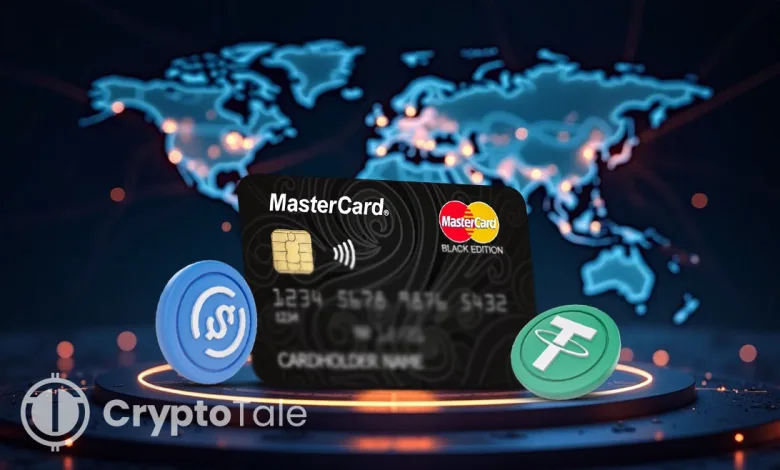
Mastercard has opened a new chapter in its digital asset strategy by launching a Crypto Partner program that links more than 85 crypto-native firms, payment companies, and financial institutions. The initiative is built around a simple commercial goal: move blockchain tools out of isolated trials and into the real payment flows that already power remittances, business transfers, payouts, and settlement across borders.
The company said participants will help shape future products that combine digital asset speed with the reach of existing card and money movement systems. The move matters as it shows where the payments firm now sees the market heading. Rather than promoting a single coin, wallet, or chain, the company is organizing a broader working network around trust, compliance, interoperability, and deployment at scale.
Mastercard said the program will let insights move in both directions between traditional finance and firms building on-chain infrastructure, while giving participants a role in designing services that can work across markets instead of remaining limited to pilots.
From Crypto Experiments To Payment Infrastructure
The company presented the new effort as an extension of work it has already been doing through Start Path, Mastercard Engage, and its Crypto Card program. That earlier push has already brought digital assets closer to mainstream spending. In a 2025 company update, Mastercard said users can spend supported stablecoin balances at more than 150 million merchant locations worldwide through partner programs.
In a separate 2024 annual report filing, the firm also said about 30% of all Mastercard transactions are now tokenized, showing how deeply blockchain-linked payment technology has already entered its wider network strategy. That background helps explain why the new Crypto Partner program is framed around execution rather than experimentation.
Mastercard said the focus is on turning technical innovation into scalable and compliant use cases for global commerce. The company tied that effort to practical payment categories such as cross-border remittances, B2B money transfers, settlement, and payouts, areas where speed, programmability, and operational efficiency matter more than headline token prices.
Why the Partner Mix Stands Out
The size and makeup of the partner group show that the program is targeting the full stack of digital asset finance. Mastercard’s published list includes firms such as PayPal, Ripple, SoFi, Binance, BitGo, Circle, Crypto.com, Marqeta, MoonPay, Paxos, Worldpay, Fireblocks, Chainalysis, Polygon, Solana, Aptos, and OKX.
That spread reaches across custody, compliance, wallets, exchanges, issuance, tokenization, settlement, and merchant acceptance. In effect, the network is not being built for one narrow product. Instead, it’s being built to connect many parts of the digital asset economy to the company’s existing payment rails.
Notably, the inclusion of SoFi is especially timely. On March 3, SoFi and Mastercard said they would enable settlement using SoFiUSD across the Mastercard network, including for SoFi Bank. The release said issuers and acquirers would be able to settle card transactions using the dollar-backed stablecoin, giving a concrete example of how digital dollars are beginning to move from theory into back-end payments operations.
Related: Stablecoin Race Heats Up as Solana Tops $15B With New Entrants
Visa’s Parallel Push Raises the Competitive Stakes
The launch also lands during a broader race among payment networks to make digital assets useful in regulated finance. Visa said in September 2025 that Visa Direct was testing stablecoins as a funding source for cross-border payouts to reduce friction and improve liquidity management.
Two months earlier, Visa once again acknowledged its settlement platform was adding support for additional stablecoins and blockchains, expanding the number of digital assets it could use for issuer and acquirer settlement. Taken together, those moves show that large card networks are no longer treating blockchain as a side project.
Mastercard’s new Crypto Partner program signals that the next contest will center on who can turn digital assets into a reliable payment infrastructure first and do it at a global scale with standards already accepted by banks, businesses, and merchants.