
Bhutan Taps Bitcoin Holdings to Fund Gelephu City Project


- Bhutan plans to use up to 10,000 Bitcoin to fund Gelephu Mindfulness City development.
- Gelephu City offers crypto-friendly rules to drive jobs, investment, and reduce youth migration.
- Officials say Bitcoin use will follow strict governance to protect value and long-term stability.
Bhutan plans to deploy part of its Bitcoin reserves to fund Gelephu Mindfulness City, a special administrative region in the country’s south. Officials said up to 10,000 Bitcoin may support infrastructure and economic programs. The government described the move as a long-term strategy for development and stability.
The project is located in Gelephu, near Bhutan’s southern border. It was launched in 2024 to slow youth migration by creating high-value local jobs. Authorities want the city to anchor new growth across finance, tourism, healthcare, agriculture, technology, and green energy.
Crypto-Friendly City Anchors Bhutan’s Bitcoin Strategy
Gelephu Mindfulness City offers regulatory flexibility for crypto and fintech firms. The framework also supports expanded Bitcoin mining activity. Bhutan also emphasized that any use of Bitcoin will follow strict governance rules. Oversight, transparency, and capital preservation will guide decisions. Officials said Bitcoin’s strength lies in its ability to compound value over time when managed with discipline.
Blockchain data shows Bhutan holds one of the largest national Bitcoin reserves. Estimates place the stash at about 11,286 coins, mostly from mining operations. The holdings are valued at more than $986 million, ranking Bhutan fifth globally among sovereign holders.
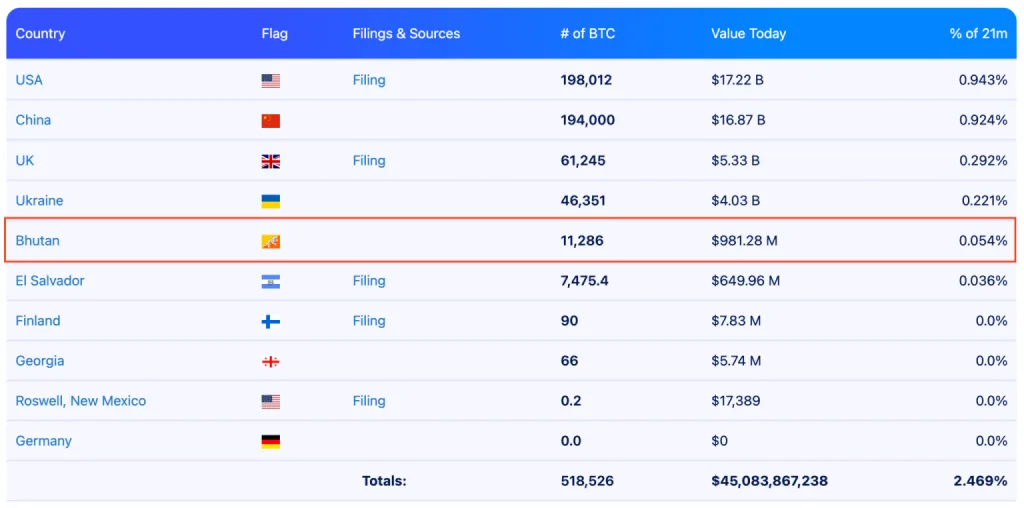
The Bitcoin allocation supports Bhutan’s wider national Bitcoin Development Pledge. The policy links mining revenue and digital assets to long-term economic planning. Leaders say the goal is to ensure benefits reach the full population of nearly 800,000 people.
King Jigme Khesar Namgyel Wangchuck said the city should function like a shared enterprise. Landowners are treated as stakeholders in its success. Since most land is state-owned, citizens from all regions are expected to benefit equally.
Related: Bhutan Joins Cumberland DRW to Build Gelephu Digital Hub
Bhutan Aligns Bitcoin Policy With City Development
Bhutan has completed the legal framework for the special region and appointed leadership. Site preparation and construction have already begun. The city will operate with executive autonomy and legal independence, and development will unfold in phases over twenty years.
Digital assets already support daily activity within Gelephu Mindfulness City. Crypto payments are accepted across merchants and tourism services. Bhutan has also deployed a national blockchain identity system serving about 800,000 citizens on Ethereum.
The government migrated the identity platform from Polygon to Ethereum in October. Officials said the shift enables verifiable credentials and digital signatures. Prime Minister Tshering Tobgay said the network improves security, transparency, and resilience for public services.
Bhutan has boosted crypto’s utilization in tourism courtesy of DK Bank and Binance Pay. The site’s users may pay with more than 100 cryptocurrencies. The system affects airlines, hotels, and small vendors, and officials argue that it underpins inclusion and sustainable growth.
On December 11, Bhutan launched TER, a sovereign digital token backed by physical gold. The token is issued on Solana and distributed through DK Bank. Officials say the initiative places Bhutan among a small group testing state-backed tokenized assets.
Together, these policies position Bitcoin as an active development tool in Bhutan. The approach links digital finance with infrastructure, governance, and national planning. As Gelephu Mindfulness City advances, officials say disciplined Bitcoin management will fund growth without harming long-term stability. The model is being watched as a rare example of sovereign crypto use tied to public development and long-range economic planning.