
Cantor Sees 2026 as Start of a Slower Institutional Cycle

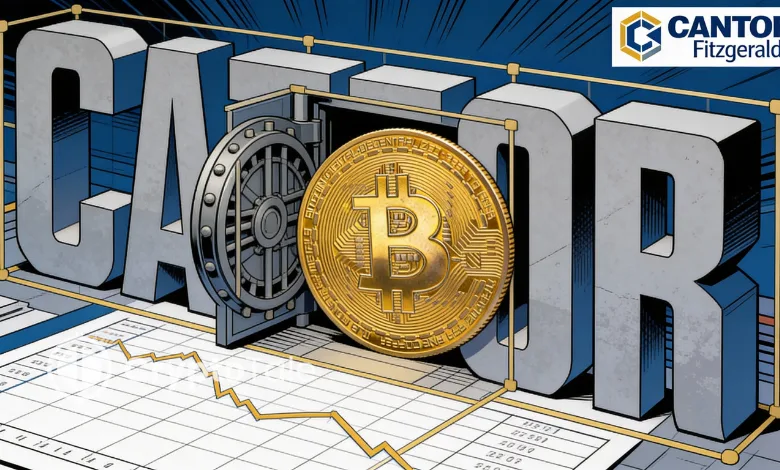
- Bitcoin sits near an early winter phase as institutional strategy replaces retail trading.
- Token prices weaken, yet DeFi tokenization and core crypto infrastructure continue expanding.
- Future recoveries may slow as macro flows and portfolio rebalancing shape market cycles.
Bitcoin may be entering a prolonged downturn that reflects a structural shift in how the crypto market behaves, according to Cantor Fitzgerald. The firm said the market appears to be moving into an early phase of a crypto winter driven by institutions rather than retail traders.
This shift could mark crypto’s transition into a macro-driven asset class shaped by portfolio strategy and infrastructure growth.
In a year-end report, Cantor analyst Brett Knoblauch said the market still aligns with Bitcoin’s historical four-year cycle. Bitcoin now sits about 85 days past its most recent peak, a period that often precedes extended price weakness. Knoblauch said prices could stay under pressure for months and may test Strategy’s average break point near $75,000.
Unlike past downturns, the report does not point to panic selling or widespread failures across the industry. Instead, institutional capital now drives market direction, replacing retail investors who dominated earlier cycles. That shift changes how corrections form and how recoveries may unfold over time.
Institutions Reshape the Crypto Downturn
Knoblauch said earlier crypto winters followed leverage collapses and rapid retail exits. Those episodes triggered forced liquidations and sudden breakdowns across exchanges and lending firms. The current cycle shows fewer signs of that behavior.
Institutional participants now dominate trading flows and allocation decisions, according to the report. Their strategies rely on risk management and portfolio rebalancing rather than emotional selling. As a result, drawdowns increasingly reflect macro liquidity conditions instead of abrupt sentiment shifts.
This change alters the market’s response to falling prices. Large investors often reduce exposure gradually rather than exit entirely. That approach limits disorderly selling while extending the duration of price weakness.
Development Activity Continues Beneath Falling Prices
Knoblauch said price action alone fails to capture current market conditions. Activity across decentralized finance, asset tokenization, and crypto infrastructure continues to expand. Those trends persist even as token prices decline.
The report pointed to a widening gap between market prices and on-chain development.
DeFi usage, settlement experiments, and infrastructure investment continue to rise. That divergence marks a clear difference from earlier cycles dominated by speculation.
Real-world asset tokenization illustrates this shift. Cantor said the on-chain value of tokenized credit, Treasuries, and equities tripled this year to $18.5 billion. The firm expects that figure could exceed $50 billion in 2026 as institutions test blockchain settlement.
Related: Cantor Fitzgerald Nears $4B SPAC Deal to Buy Bitcoin
Slower Recoveries Replace Boom-Bust Cycles
Institutional adoption accelerated through 2025 and into 2026 as regulation improved and market plumbing matured. Firms increasingly use exchange-traded products, regulated custody, and tokenized assets that fit traditional portfolios. These tools support long-term exposure rather than short-term trading.
Knoblauch mentioned that this setup might influence the course of recoveries following the economic downturns. The future market revivals may not have the striking price surges that were characteristic of previous crypto cycles. On the contrary, the recoveries could be slow but steady, supported by the betterment of the underlying factors.
The situation is similar to the early days of the internet, when companies kept investing in the infrastructure while their stocks were losing value. Even when the market was not ready for the product, the network was already growing. So, now crypto winters are moments when the market reverts to its beginning, not times when crypto is dead.
Cantor said the growing divide between prices and underlying activity supports that view. On-chain metrics show continued commitment from institutions building long-term systems. Market value may decouple temporarily from productive capacity as the asset class matures.