
Safe-Haven Gold Crashes Into Bear Market Amid U.S.-Iran War and Rising Yields

- Gold fell 25% from its peak as rising yields and a stronger dollar cut demand.
- Gold ETFs lost over 60 tonnes in three weeks, signaling broad institutional exits.
- Analysts see $4,654 and $4,671 as key levels as Fed signals steer gold’s next move.
Gold tumbled into bear market territory after one of its sharpest weekly reversals in decades, as war-driven volatility collided with higher U.S. yields and a firmer dollar. The sell-off marked the metal’s worst week since 1983 and wiped out an estimated $7.3 trillion in value since the U.S.-Iran war began on February 28.
The decline left gold about 25% below its recent peak, even as prices showed signs of stabilizing later in the week. The metal traded near $4,552 on the latest reading, still down 6.19% over seven days but up about 3.95% in 24 hours. The move showed that safe-haven demand alone did not outweigh a fast shift in rates and currency markets.
Yields and the Dollar Repriced the Trade
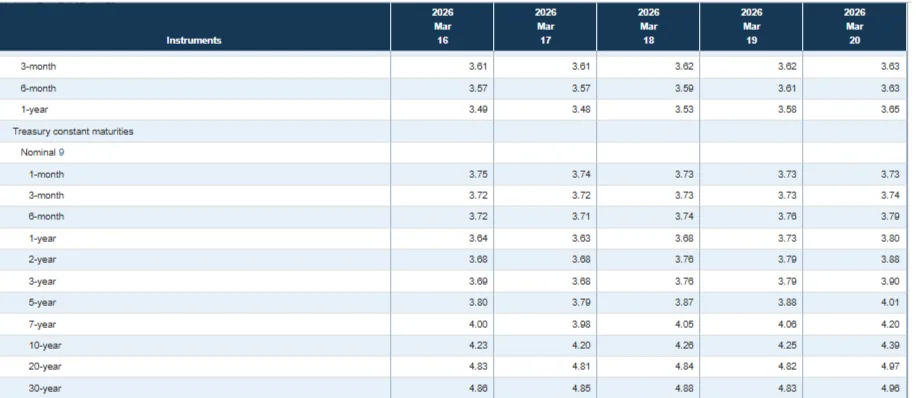
The sharpest pressure came from the bond market. The U.S. 10-year Treasury yield climbed as high as 4.39%, with weekly readings near 4.2%, making interest-bearing assets more competitive. Gold pays no yield, so rising real returns on Treasuries reduced its relative appeal.
Source: Federal Reserve
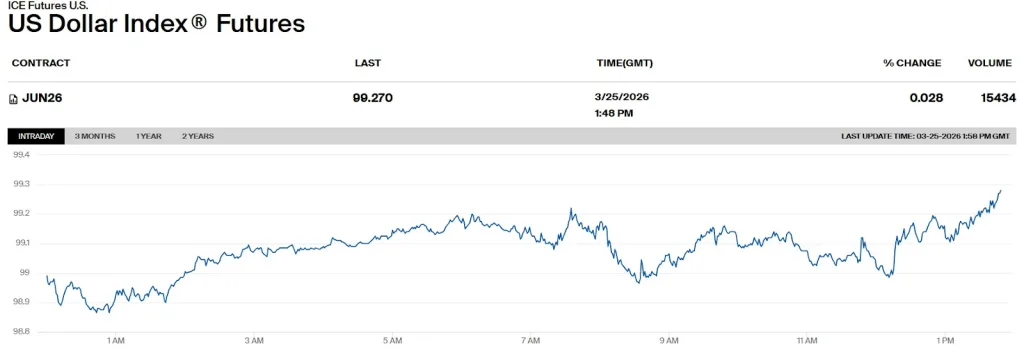
At the same time, the Dollar Index rose to 99.9, creating a second barrier for bullion. A stronger dollar typically raises the cost of gold for buyers using other currencies. That combination of higher yields and a firmer dollar overwhelmed the conflict’s usual support for haven assets.
Source: ICE
Cooling oil prices later in the week also eased some inflation pressure. That mattered because inflation fears had briefly supported defensive positioning. Once those fears softened, part of the emergency bid faded with them.
Oil Shock Reshaped the Rate Outlook
Earlier in the week, oil had surged toward four-year highs after strikes hit Middle Eastern energy infrastructure. That spike prompted central banks to emphasize caution amid energy-driven inflation. The Reserve Bank of Australia raised rates, while the Federal Reserve, European Central Bank, Swiss National Bank, and Bank of Japan held steady and warned against quick policy shifts.
That policy backdrop mattered for gold as rate expectations drive real yields. If markets expect central banks to stay firm, non-yielding assets face more pressure. The latest drop showed how quickly macro positioning can dominate even during geopolitical stress.
Technical Damage Put Lower Levels in Focus
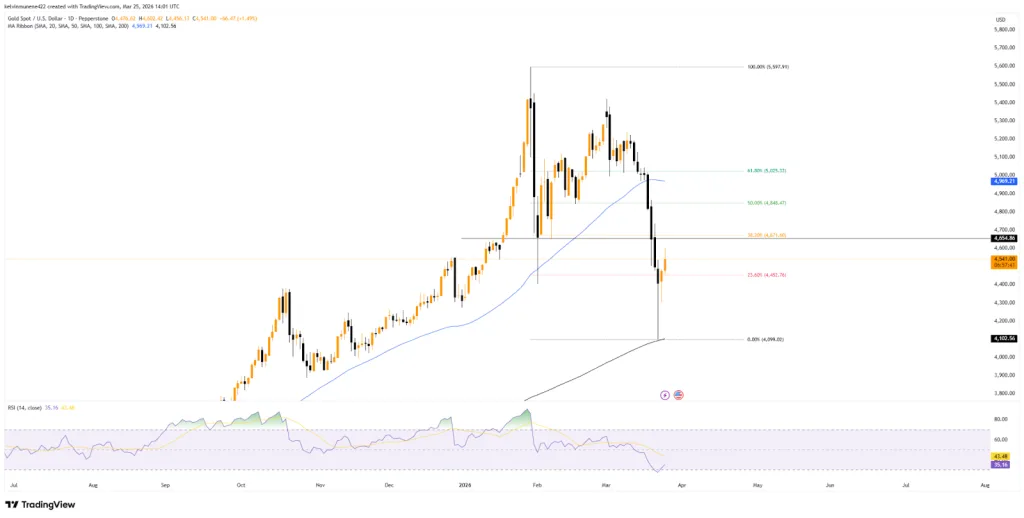
The next major level sits at $4,671, marking the 38.20% retracement of the 2026 slump from its January high. Analysts at The Gold Forecast said on March 20 that gold was “suspended in open air” between broken support at $4,654 and that lower retracement zone.
Source: TradingView
Below that, the 200-day moving average near $4,102 remains the critical marker. A hold above that level would keep the move in correction territory. Nonetheless, a sustained break below it would expose the $3,500 area, the base of the 2025 advance.
The near-term catalyst remains Federal Reserve communication. Any signal that policymakers may look through, oil-led inflation would ease the main pressure point. More hawkish messaging would likely keep downside risk elevated.
Related: Mark Cuban Says Crypto Poses a Major Threat to Big Banks
ETF Outflows Added to the Selling Pressure
Institutional positioning also turned sharply negative. Gold ETFs lost more than 60 tonnes over the past three weeks, indicating that the retreat extended beyond short-term profit-taking. The scale of those exits pointed to broader portfolio repositioning.
Even so, longer-range bank forecasts remain constructive. J.P. Morgan kept a year-end 2026 target of $6,300, Wells Fargo held a $6,100 to $6,300 range, and BNP Paribas raised its 2026 average forecast by 27% and said a peak above $6,250 remained likely.
Ed Yardeni, however, said this week he was considering reducing his $6,000 target to $5,000 if weakness continues. The result was a rare market split. Gold still carried long-term support from central bank demand, but in the short term, yields and the dollar set the tone.