Kanye West Hints At Blockchain Amid Swasticoin Controversy

- Kanye West hinted at launching his own blockchain after previously opposing crypto.
- He faced criticism for teasing a token with a controversial name with offensive remarks.
- The rising trend in celeb-meme coin launches has sparked debates in the crypto community.
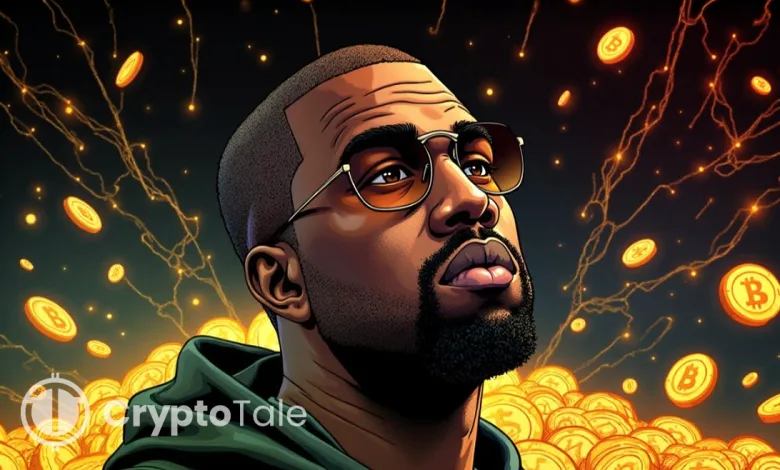
A few welcomed and a few criticized when Kanye West, the American rapper, shared updates about the launch of his own blockchain. It was on the 23rd of February he made a post hinting at his plans on X, which sparked mixed reactions from the crypto community.
On February 8, CryptoTale reported about his 2 million dollar proposal which was rejected by him. As per the proposal, he was supposed to help promote a scam project and claim his account was hacked. He denied getting involved in the memecoin launch by writing, “COINS PREY ON THE FANS WITH HYPE.”
And now another tweet came from West’s X account stating, “I need my own blockchain.” with the name YZYCHAIN. This sparked a frenzy in the community and made the market think about the possibility of the launch. Even Polymarket predicted a 52% chance for this artist to launch his own coin by this Feb.
Along with his posts about blockchain launches, he also enquired about blockchain networks like Ethereum, Solana, and BNB, which stand like a confirmation sign. He also sought to connect with Binance co-founder CZ.
Related: Memecoins vs. Fundamentals: CZ Breaks the Silence on TST
The Controversial Swasticoin Launch
Earlier on January 22, Kanye West made a similar announcement. During this, he teased in his X posts about the launch of a token called “Swasticoin” the following week, which has now been deleted. The renowned rapper has not only done such publicity activities in the crypto community. He has also posted offensive content about the Jewish community, for which he received backlash. He said,
<blockquotes>”I’m going to open the CA [contract address] for my Swasticoin to Jewish people and my friends and family first,” “Let’s see if stereotypes exist for a reason” </blockquotes>
This is not West’s first time promoting the symbol of Nazi, as he recently began selling t-shirts on his websites titled HH-01, short form for “Heil Hitler‘, featuring a Swastika on a plain white t-shirt.
Lately, several celebrities from politics, entertainment, and sports have tried to launch cryptocurrencies to take advantage of the massive money they bring in. President Donald Trump’s $TRUMP memecoin and Argentina President Javier Melei’s $LIBRA token are examples of such token launches. While Kanye declared, “He needs his own blockchain,” being unpredictable in nature he can still change his mind and completely abandon the idea.