SEC’s Cryptic Stance on US Seizure of Venezuela’s Bitcoin

- SEC Chair said any US action on Venezuela Bitcoin assets falls outside the SEC authority.
- Claims Venezuela holds up to 600,000 Bitcoin remain unverified by blockchain analysts.
- US lawmakers focus on crypto market rules as Venezuela Bitcoin questions stay unresolved.
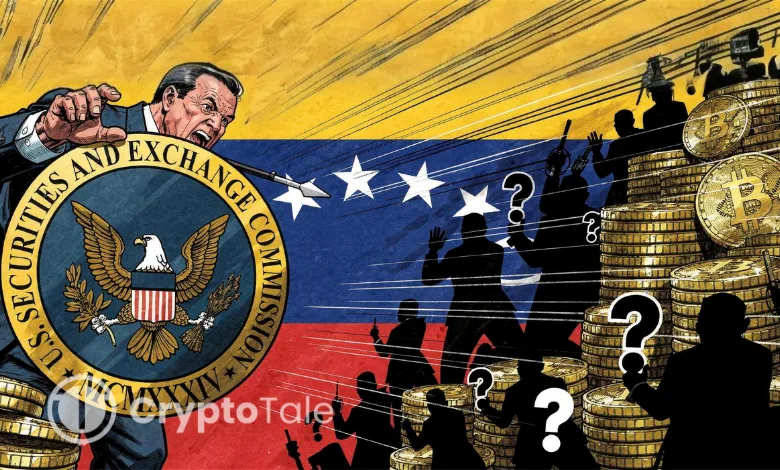
The head of the US securities regulator has distanced himself from any potential US move to seize Venezuela’s alleged $60 billion worth of Bitcoin reserves. His remarks cast doubt on one of the most dramatic claims circulating in global crypto markets.
In a televised interview, the SEC chair, Paul Atkins, said decisions on foreign asset seizures fall outside the Securities and Exchange Commission’s authority.
“…That I leave that to others in the administration to deal with… I’m not involved in that,” replied Paul Atkins when asked whether the US would “take those Bitcoin off ‘em.”
Even if Venezuela held Bitcoin at the scale reported, translating allegations into enforcement would require legal authority, jurisdiction, and verified control of private keys. Yet, none of those elements has been publicly demonstrated.
Origins And Limits Of The Bitcoin Claims
The comments come amid intense political and financial claims involving Venezuela and Bitcoin, and also follow recent US actions tied to the country’s leadership. Some reports suggest Venezuela built a large digital reserve through three main channels: gold transactions dating back to 2018, oil revenue allegedly priced in Bitcoin, and seized assets from domestic crypto miners.
Intelligence sources cited in the report suggested that Venezuela exported 73.2 tons of gold in 2018, valued at roughly $2.7 billion at the time.
Analysts note that large-scale Bitcoin purchases would likely leave detectable traces unless routed through complex intermediaries and custody arrangements. Those claims are based on human intelligence sources rather than verified transaction data.
The reports also named businessman Alex Saab as a central figure in managing alleged crypto conversions. Court records previously revealed that Saab acted as a US informant while maintaining financial operations tied to the Venezuelan state. His current role, if any, in controlling digital assets has not been confirmed.
Related: Dubai Regulator Bans Privacy Coins in DIFC From Jan. 12
Lawmakers Focus On Crypto Regulation, Not Seizures
The remarks from the SEC Chair coincided with renewed legislative activity in Washington. The US Senate Banking Committee is scheduled to hold a markup on the Digital Asset Market Clarity Act, known as CLARITY, later this week.
The House passed the bill in July, though progress slowed due to a 43-day government shutdown late last year. The legislation seeks to clarify regulatory responsibilities across US agencies, including expanding authority for the Commodity Futures Trading Commission over digital assets.
Banks and crypto firms have raised concerns about provisions addressing stablecoin rewards, while Democratic lawmakers are pushing for stronger ethics rules and clearer treatment of decentralized finance. With midterm election campaigning underway and another potential government shutdown looming, the bill’s timeline remains uncertain.
Still, the focus of lawmakers remains market structure and oversight rather than foreign asset seizures. For now, the SEC Chair has drawn a firm boundary around his agency’s role, leaving questions about Venezuela and Bitcoin firmly in the realm of unverified claims and interagency decision-making rather than securities enforcement.