Uniswap Vote Advances Fee Switch and 100 Million UNI Burn

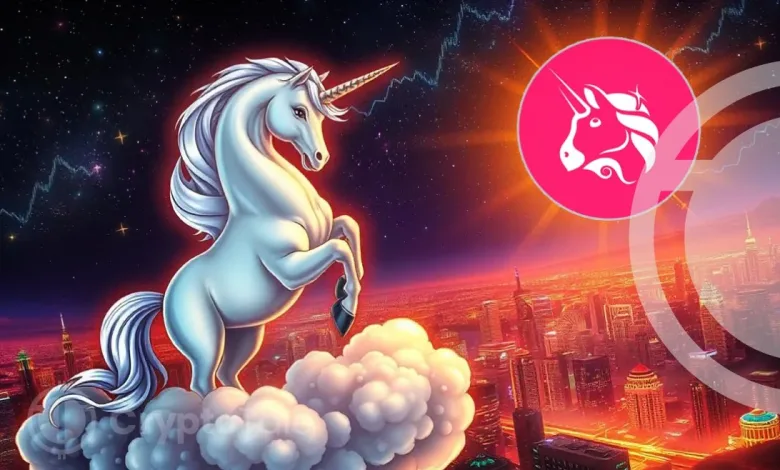
- UNIfication vote could activate fee switch, redirect protocol revenue, and burn 100M UNI.
- Protocol fees from Uniswap v2, v3, and Unichain would flow into an on-chain UNI burn.
- Proposal realigns Uniswap Labs, governance roles, and value flows under one framework.
Uniswap governance opened a decisive vote that could redirect protocol revenue and permanently cut UNI supply. The on-chain vote runs from December 20, 2025, at 9:03 a.m. UTC to December 25, 2025, at 11:27 p.m. UTC, on Ethereum. Uniswap founder Hayden Adams submitted the proposal after legal and regulatory conditions shifted, enabling protocol fees and a 100 million UNI burn.
The proposal, called UNIfication, brings together years of governance debates into one binding package. It focuses on activating the fee switch, restructuring value flows, and aligning Uniswap Labs with token holders. From there, the vote sets the framework for how usage, fees, and token supply interact going forward.
Fee Switch Activation and the UNI Burn Mechanism
Priority of the vote is Uniswap’s long-dormant fee switch, which governance can activate only through UNI voting. If approved, Uniswap would begin collecting protocol fees across selected v2 and v3 pools on Ethereum mainnet. These pools generated more than $700 million in fees over the past year, according to the proposal.
Notably, Uniswap v2 pools would reduce liquidity provider fees from 0.3% to 0.25%. The remaining 0.05% would flow directly to the protocol. On Uniswap v3, protocol fees would capture fractions of existing LP fees, depending on the pool tier.
Initially, v3 pools with 0.01% and 0.05% fees would allocate one-quarter to the protocol. However, 0.30% and 1% pools would allocate one-sixth. Governance could later adjust these parameters as data emerges.
All protocol fees would route into a new on-chain system designed to burn UNI. Fees would accumulate in a TokenJar contract and could exit only through a burn contract called Firepit. This structure directly links trading activity to token supply reduction.
Alongside ongoing burns, the proposal includes an immediate retroactive burn of 100 million UNI from the treasury. The authors estimate this amount reflects fees that could have accrued since UNI launched. The burn would reduce the circulating supply from about 629 million tokens to 529 million tokens.
Expanding Revenue Sources Beyond ETH Mainnet
Beyond swap fees, the proposal widens the protocol’s revenue base through Unichain. Unichain launched about nine months ago and processes roughly $100 billion in annualized DEX volume. It also generates about $7.5 million in annualized sequencer fees, according to the team.
Under the plan, Unichain sequencer fees would also flow into the UNI burn mechanism. This would occur after Layer 1 data costs and a 15% allocation to Optimism. As a result, protocol revenue would extend beyond Ethereum trading alone.
The proposal also outlines future expansions, including Uniswap v4, UniswapX, aggregator hooks, and Protocol Fee Discount Auctions. PFDA aims to internalize certain MEV by auctioning temporary fee discounts, with proceeds burned as UNI. Early analysis suggests this could improve liquidity provider returns per trade.
Aggregator hooks would allow Uniswap v4 to source external liquidity while adding an extra UNI burn layer. However, these components would require separate governance proposals before activation.
Related: UNI Soars Over 60% in a Week to $10—Can Bulls Keep the Rally Alive?
Governance Restructuring and Uniswap Labs Roles
The UNIfication vote also reorganizes operational responsibilities across the ecosystem. It shifts many functions from the Uniswap Foundation to Uniswap Labs. These include ecosystem support, governance coordination, and developer relations.
To formalize alignment, Uniswap Labs would enter a legally binding services agreement with DUNI, the DAO’s legal entity under Wyoming’s DUNA framework. This agreement aims to ensure Lab activities remain consistent with UNI holder interests. Indemnification agreements would cover members of the independent negotiation committee.
In exchange, Uniswap Labs would eliminate interface, wallet, and API fees. It would also commit to focusing exclusively on protocol development and growth. To fund this work, governance would approve a 20 million UNI annual growth budget starting in 2026, distributed quarterly through vesting.
Meanwhile, Uniswap governance would also migrate the Unisocks liquidity position from v1 to v4 on Unichain and burn it. This step would permanently lock the supply curve tied to that early experiment.
Together, these changes connect fee generation, token burns, and operational control under one governance framework. The vote brings protocol economics, infrastructure, and development priorities into a single on-chain decision.
If approved, UNIfication would represent the most comprehensive governance action in Uniswap’s history. It would activate protocol fees, execute the largest UNI burn to date, and redefine how value circulates through the ecosystem. The outcome now rests with UNI holders voting before the December 25 deadline.