
MP Raghav Chadha Calls for India Tokenization Bill

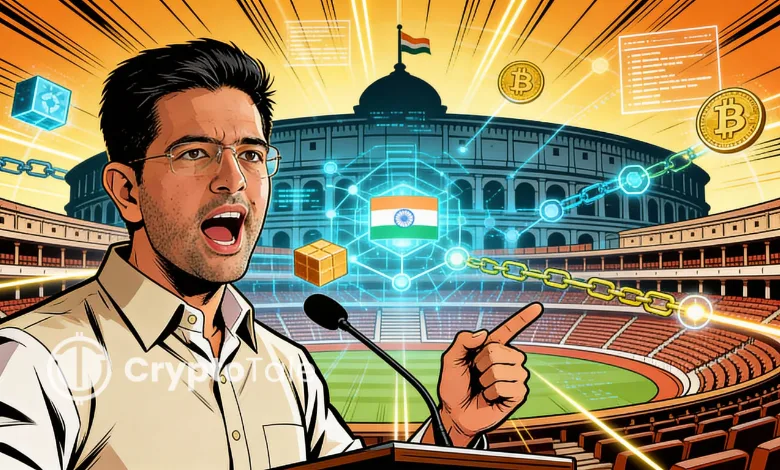
- Raghav Chadha calls for a tokenization bill to regulate blockchain-based real-world assets.
- The discussed proposal aims to open high-value investments to ordinary Indian citizens.
- Chadha urges legal clarity to prevent Indian assets from moving offshore unchecked.
Aam Aadmi Party Member of Parliament Raghav Chadha urged India’s government to introduce a dedicated Tokenization Bill during a Rajya Sabha session on December 16, 2025. His proposal seeks to create a legal framework for blockchain-based real-world assets and digital tokens.
Chadha framed the proposal as a shift in India’s digital asset approach. He moved the debate beyond taxing speculative crypto trades toward building a regulated on-chain economy. He said such an economy could support middle-class participation and domestic capital formation.
Speaking in Parliament, Chadha argued that India risks falling behind global peers without a clear law. He said blockchain applications now extend far beyond trading tokens. They include property, infrastructure, commodities, and financial instruments.
The proposal marked one of the clearest political endorsements yet for asset tokenization. It also reflected a broader attempt to align blockchain policy with financial inclusion goals. Can India afford to delay a framework while real-world assets move on-chain globally?
Democratizing Asset Ownership Through Tokenization
Chadha centered his proposal on what he described as the democratization of finance. He said large investments remain inaccessible to most citizens under the current system. These include commercial real estate, infrastructure projects, and rare commodities.
He explained that tokenization allows these assets to be divided into small digital units. Each unit can trade on a blockchain. This structure would let citizens invest small amounts rather than large lump sums.
Chadha said individuals could gain exposure to high-yield assets with a few thousand rupees. He argued that this approach opens markets once limited to billionaires and institutions. It also enables broader participation in national economic growth.
He described asset tokenization as one of the most transformative financial innovations of the century. He linked its adoption to higher transparency, lower transaction costs, and improved liquidity. These features, he said, rely on a strong legal base.
Regulatory Clarity and a Proposed Sandbox Model
Chadha told lawmakers that India’s current regulatory environment remains fragmented. He said businesses lack clarity on token classifications, taxation, licensing, and dispute resolution. This uncertainty, he warned, discourages innovation and investment.
To address this, he called for a regulatory sandbox. Such a sandbox would allow fintech firms to test tokenized products under regulatory supervision. He said this approach balances innovation with oversight.
Chadha warned that India risks losing control over domestic assets without a national law. He said Indian property and data could trade on foreign networks without proper oversight. A domestic framework, he argued, protects sovereignty and market integrity.
He pointed to global examples for guidance. Chadha referenced the European Union’s MiCA rules, Singapore’s digital asset guidelines, and Switzerland’s blockchain laws. He said India can adapt these models to local needs.
Related: India’s Madras HC Upholds XRP as Digital Property in Law
Tax Structure and Middle-Class Capital Retention
Going further than just tokenization, Chadha took on the issue of India’s investment tax system. He mentioned that the existing policy discourages domestic savings made for the long term. He contended that the system considers capital in the long run as being similar to short-term speculation.
To counter this, he proposed targeted tax incentives. He suggested raising tax-free limits on interest income from savings accounts. He also proposed concessions for fixed deposits held longer than five years.
Chadha linked these measures to formal capital retention. He said incentives would encourage households to keep funds within regulated financial channels. This, he argued, supports economic stability and long-term growth.
In his presentation, he portrayed tokenization and tax reform as two-sided tools that complemented each other. They could jointly direct the savings to the productive assets. His comments made it very clear that legislative clarity was the heart of India’s changing financial structure.