Russia Rolls Out Tiered Crypto Access for Domestic Investors

- Russia plans tiered crypto access, limiting retail buyers and testing investor demand first.
- Non-qualified investors to face limits, exams, and a 300,000-ruble annual investment cap rule.
- Qualified investors gain broader access as crypto trading shifts into licensed platforms.
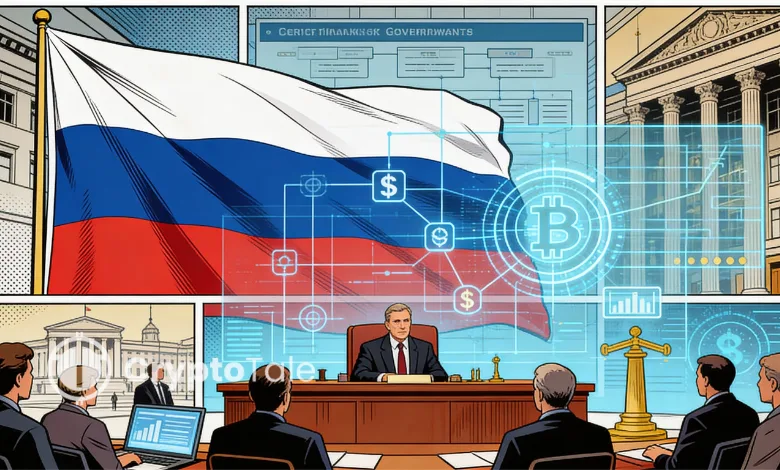
Russia’s central bank has drafted a structured framework to regulate crypto access inside the country, a shift from outright resistance to controlled legalization. The plan outlines who can buy crypto, how much, and through which channels. The Bank of Russia aims to integrate crypto trading into licensed markets by mid-2026 while limiting consumer and systemic risks.
Central Bank Redefines Access Rules for Crypto Investors
The Bank of Russia has proposed a tiered access model that separates qualified and non-qualified investors under different requirements. According to Bloomberg News, the framework allows both groups to purchase cryptocurrencies, although conditions vary. Notably, the proposal introduces formal investor testing as a gateway to participation.
For non-qualified investors, access would remain narrow and tightly capped. Retail participants could only purchase a list of the most actively traded cryptocurrencies. However, the central bank has not yet published which assets would qualify.
In addition, non-qualified investors must pass a basic knowledge exam before entering the market. Moreover, annual purchases would be capped at 300,000 rubles, roughly $3,800. All transactions must run through a single licensed intermediary.
Qualified investors would face fewer restrictions under the same framework. They could purchase most cryptocurrencies without volume limits, provided they complete a risk-awareness test. The proposal, however, excludes anonymous or privacy-focused tokens from unrestricted access.
The central bank has already submitted the framework and related legislative amendments to the government. Officials have targeted July 1, 2026, for the full regulatory rollout. Enforcement mechanisms, however, remain under development.
Crypto Into Licensed Markets
The proposal shows the Bank of Russia’s intent to shift crypto activity into a supervised financial infrastructure. If adopted, crypto trading would occur through licensed exchanges, brokers, and trust managers. Separate standards would also apply to custodians and trading platforms.
Notably, intermediaries serving non-qualified investors would face additional obligations. These include identity verification, clear risk disclosures, cybersecurity standards, and client asset segregation. As a result, compliance costs could favor larger institutions with established infrastructure.
At the same time, the framework allows Russian residents to buy cryptocurrencies abroad. Investors could use foreign accounts and overseas exchanges. However, they would need to report those transactions to Russian tax authorities.
The Bank of Russia also proposed allowing digital financial assets to circulate on public networks. Officials said this approach could support foreign investment under controlled conditions. However, crypto would remain classified strictly as an investment asset.
Despite the expanded access, the central bank reiterated its cautious stance. “The Bank of Russia still considers cryptocurrencies to be high-risk instruments,” the regulator said. It cited volatility, lack of issuer guarantees, and sanctions-related exposure.
Related: Russian Central Bank Shifts Tone on Bitcoin Mining Role
Sanctions Pressure Drives Gradual Policy Shift
The framework builds on earlier policy changes driven by sanctions pressure. In January 2022, the Bank of Russia called for a complete ban on crypto issuance and use. At that time, it compared cryptocurrencies to pyramid schemes and financial stability threats.
However, Western sanctions later restricted Russia’s access to global banking networks. Since then, individuals and companies have increasingly used digital assets for cross-border settlements. This activity expanded even without comprehensive regulation.
In 2024, authorities eased restrictions on crypto use for businesses. The government also legalized crypto for foreign trade settlements. Around the same period, commercial banks gained approval for limited crypto-related operations.
Russia has also permitted cryptocurrency mining using its energy surplus. The central bank has acknowledged mining as a legitimate export activity. Officials framed it as a contributor to economic value rather than a financial risk.
Domestic payments remain restricted. Russia still bans Bitcoin and other cryptocurrencies from being used as official payment. All payments inside the country must continue to be made in rubles.
The proposed rules are meant to organize what’s already happening, not to increase crypto use. By separating investor types, limiting access for everyday users, and blocking anonymous tokens, the Bank of Russia aims to reduce risk and keep crypto activity within regulated and transparent systems.
Meanwhile, the Bank of Russia’s tiered crypto access framework covers investor eligibility, transaction limits, and licensed intermediaries. The proposal is a shift toward regulated participation rather than prohibition, shaped by sanctions and market realities. Officials now aim to implement the framework by mid-2026 while maintaining strict oversight.