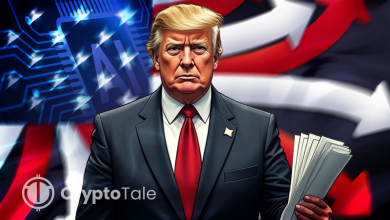
Cathie Expects Washington To Make Direct Bitcoin Purchases


- U.S. considers direct Bitcoin purchases to expand a national reserve beyond seized assets.
- Executive orders shifted U.S. policy from auctions toward long-term Bitcoin holding.
- Potential U.S. buying would place sovereign demand against limited Bitcoin supply.
The U.S. government is finding ways to hold a Bitcoin reserve. During a recent “Bitcoin Brainstorm” podcast, ARK Invest founder Cathie Wood said Washington may soon buy Bitcoin directly. The discussion centers on actions taken in early 2025, involving President Donald Trump, federal agencies, and an executive order creating a national Bitcoin reserve.
From Seized Assets to Strategic Accumulation
The current U.S. Bitcoin reserve relies entirely on seized assets from law enforcement actions. These holdings include roughly 210,000 Bitcoin linked to cases like Silk Road. Historically, agencies auctioned such assets, treating them as forfeited property rather than strategic resources. However, Trump’s executive order changed that approach by designating seized Bitcoin as a long-term national asset.
Cathie Wood explained that the original policy goal extended beyond holding confiscated Bitcoin. According to her, early discussions targeted ownership of up to one million Bitcoin. Notably, she said hesitation around open-market purchases reflects policy caution, not abandonment of that goal. This distinction matters because direct buying would place the U.S. alongside investors and institutions competing for a limited supply.
The order also instructed the Treasury and Commerce Departments to explore budget-neutral ways to add Bitcoin. So far, officials have made no purchases. However, Wood argued that exploration language leaves room for market activity. As a result, Bitcoin’s status shifts from contraband storage toward strategic accumulation, similar to how gold reserves grew.
Political Pressure and Legislative Momentum
Wood linked potential Bitcoin purchases to political incentives facing President Trump. Speaking on the podcast, she said crypto remains a key issue as midterm elections approach. According to Wood, Trump wants productive years ahead rather than entering a lame-duck phase. She added that crypto offers a policy area with measurable action and voter interest.
During the last election cycle, crypto firms and executives became more visible politically. Groups like ‘Stand With Crypto’ funded campaigns nationwide. Several industry leaders, including Wood, publicly supported Trump. Meanwhile, the White House hosted crypto-focused events, and companies like Coinbase, Tether, and Ripple helped fund a new White House ballroom.
Policy actions followed these relationships. Trump signed executive orders establishing both a Bitcoin reserve and a broader crypto stockpile. He also formed a crypto and AI working group led by David Sacks. That group later released policy recommendations, including expanded Commodity Futures Trading Commission oversight of spot crypto markets.
Legislative efforts moved similarly. The administration backed bills like the GENIUS Act, which set federal stablecoin rules. Another proposal, the Digital Asset Market Clarity Act, aims to define asset categories and regulatory roles. These steps show crypto policy moving from enforcement debates into structured economic planning.
Related: U.S. Bitcoin Reserve Faces Scrutiny After Reports of Government Sales
Sovereign Competition and Market Structure
Direct U.S. Bitcoin purchases would carry structural significance. For the first time, a major sovereign power would actively compete with private institutions for Bitcoin supply. That action differs from countries like El Salvador, which buy Bitcoin but operate on smaller scales. In contrast, U.S. participation would influence global reserve thinking.
Wood framed Bitcoin as comparable to gold and foreign currencies within the reserve strategy. She noted that central banks already diversify holdings amid geopolitical tension. Meanwhile, Bitcoin’s fixed supply creates scarcity dynamics unlike traditional reserves. As governments assess digital assets, reserve management increasingly includes non-physical stores of value.
Operational details remain defined by existing orders. The Treasury Department would administer both the Bitcoin reserve and crypto stockpile. The Sacks-led report confirmed capitalization currently depends on forfeited assets. However, it also left open pathways for expansion without taxpayer funding, preserving political feasibility.
State governments add another layer. Florida and Texas have advanced legislation to create state-level crypto reserves. These moves are building momentum across different regions. Taken together, actions at both the federal and state level are starting to treat Bitcoin less like a regulatory headache and more like a useful economic tool within the U.S. financial system.
The focus has now shifted from intentions to actual follow-through. Wood’s remarks pointed to timing, incentives, and institutional systems that are already in place. Each of these links Bitcoin policy to elections, lawmaking, and global competition, keeping the conversation grounded in structure rather than hype.
Meanwhile, U.S. policy around Bitcoin has moved away from selling seized assets and toward holding them long term. Executive orders, task forces, and proposed laws now frame Bitcoin as a strategic asset. Cathie Wood’s comments help connect these pieces, explaining how direct purchases could align with existing government plans.