
Binance to Suspend EU Services After MiCA License Setback

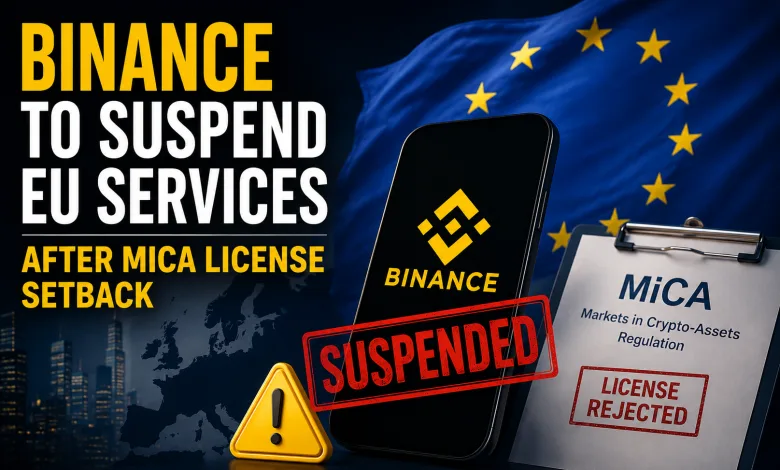
- Binance will limit some EU services after missing the July 1 MiCA licensing deadline.
- The exchange will pursue French approval after its Greek license application failed.
- Licensed rivals may gain EU clients as Binance oversees an orderly service wind-down.
Binance is expected to halt serving some European Union customers from next week after failing to secure the license required under the Markets in Crypto-Assets Regulation. The exchange plans to take compliance measures before July 1 while seeking authorization in another EU country.
According to reports, Binance’s application for a bloc-wide license through Greece failed last week. Without approval, crypto companies must stop offering regulated services across the EU or face penalties.
Customers in Poland, Italy, Spain, and France have received emails explaining how to withdraw their funds, according to the FT. Binance currently holds local registrations in those markets, but MiCA requires broader authorization after the transition period.
Binance Seeks Another Route Into the EU
Binance told CNBC that it would take “the necessary steps before 1 July to remain compliant with applicable requirements.” The company said some users may face disruption and promised clear instructions about their next steps. The exchange remains confident that it can obtain a license “in the coming months.” People familiar with its plans told the FT that Binance now intends to submit an application in France.
Any French approval would probably arrive well after the July 1 deadline. Until then, Binance must limit or stop services that require MiCA authorization across the European Union. MiCA creates one rulebook for cryptocurrency services across the bloc. Approval from one member state can allow a company to serve customers throughout the EU under shared regulatory standards.
The European Securities and Markets Authority warned that not every provider would secure authorization before the deadline. ESMA advised users to check whether their provider appears on the official authorization register.
ESMA also said companies without approval must stop offering regulated services. Those providers must manage customer departures and other wind-down procedures in an orderly manner.
Related: Binance Denies $1.7 Billion Iran-Linked Crypto Flow Reports
Licensed Rivals Target Binance Customers
Bitpanda founder Eric Demuth promoted his company’s regulated position after the development. “While others optimized for speed, we optimized for trust,” he wrote on X. Demuth said the European Union values regulation and consumer protection. He added that Bitpanda had built its operations around Europe’s regulatory requirements from the beginning.
OKX founder Star Xu also promoted his company’s “trustworthy crypto and fintech services” on X. Other exchanges have already moved forward with their European licensing plans. Coinbase opened its MiCA hub in Luxembourg before the deadline. OKX, Bitpanda, and Crypto.com have also worked to secure regulated access across the region.
The licensing setback adds to Binance’s wider history with regulators. The United Kingdom has banned the company since 2021, while French officials opened a judicial investigation last year. French authorities said Binance may have assisted money-laundering activities. Binance denied those allegations.
In 2023, Binance pleaded guilty in the United States to charges involving money laundering controls and international sanctions breaches. The settlement required the company to pay more than $4.3 billion to U.S. authorities.
Founder Changpeng Zhao stepped down as chief executive and later served a four-month prison sentence. U.S. President Donald Trump pardoned Zhao in 2025. Zhao founded Binance in 2017. The company says it remains the world’s largest cryptocurrency exchange by trading volume.